

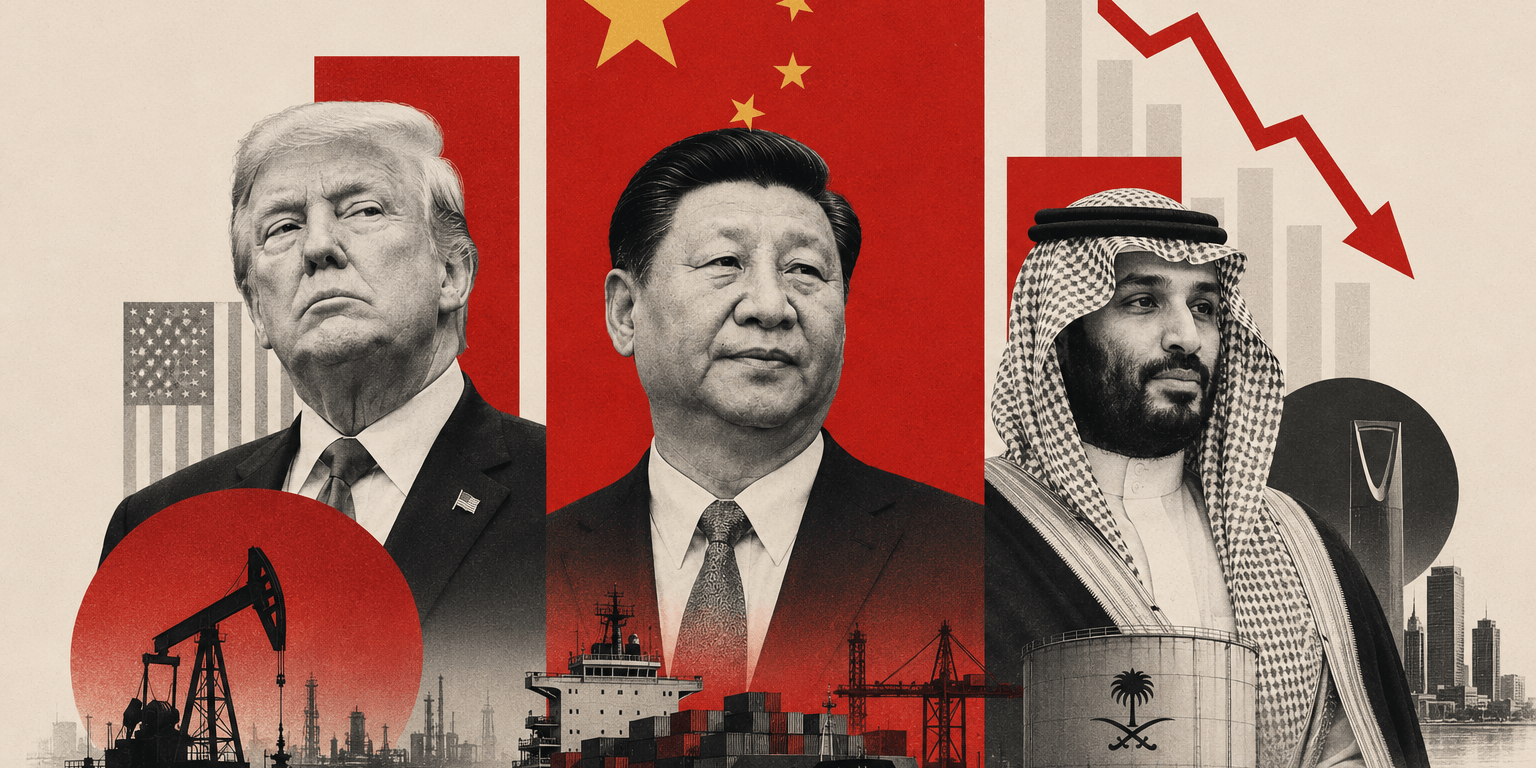
When the Iran war began, the nightmare scenario seemed straightforward. Iran had effectively choked the Strait of Hormuz, one of the world’s most important energy chokepoints. Around one-fifth of global oil flows through the waterway, and the disruption threatened to turn an already dangerous conflict into a global economic crisis. Oil prices surged, warnings of shortages multiplied, airlines began cancelling flights and governments prepared for the possibility of a prolonged energy shock.
And then something strange happened. The global economy did not collapse.
The oil shock was severe, but it was nowhere near the apocalyptic scenario that had been predicted. By August, Brent crude was trading around $89 a barrel, while Gulf exports had partially recovered despite continued disruption around Hormuz.
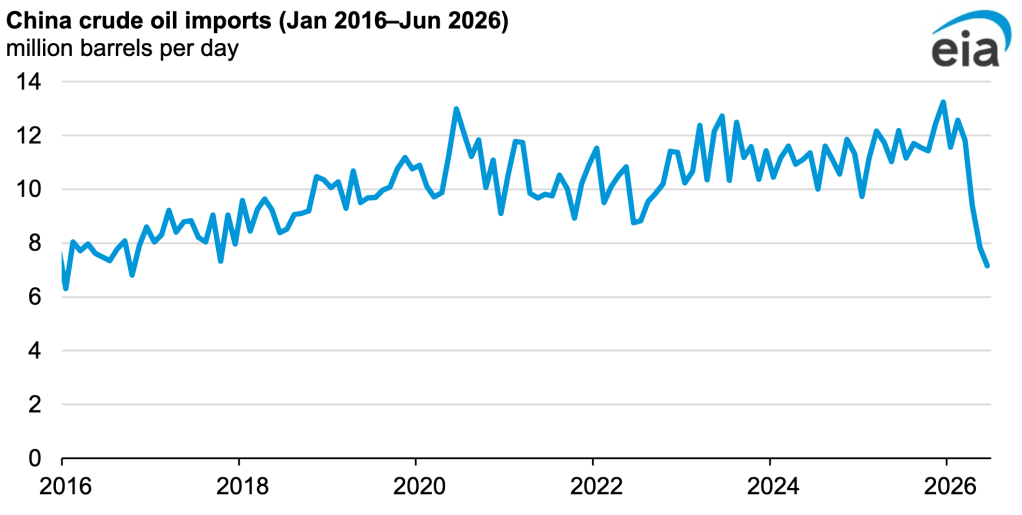
The missing piece was China. China did not enter the war as a combatant. It did not send an expeditionary force into the Gulf or fight alongside Iran. Instead, it did something far more consequential for the global economy: it dramatically reduced its own demand for oil at precisely the moment when the world needed those barrels elsewhere. According to the analysis presented in the accompanying video, China’s oil imports fell by roughly half, equivalent to around 5.5 million barrels a day. In a global oil market where supply and demand normally operate with remarkably little spare capacity, that was an extraordinary intervention.
The significance becomes clearer when looking at the numbers. The disruption to Hormuz initially threatened roughly 20 million barrels a day of supply. Alternative pipelines restored several million barrels, while emergency stockpile releases from dozens of countries provided additional support. But even after those measures, the global market faced a huge shortfall. China’s reduction in consumption effectively absorbed another part of the shock.
China, in other words, became the shock absorber. But this was not an act of sudden generosity from Beijing. It was the consequence of a very long-term strategy.
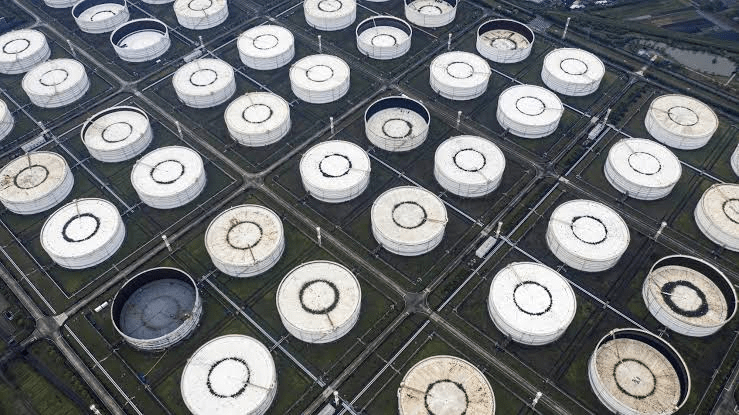
The most obvious explanation for China’s resilience is its oil reserves. China’s strategic petroleum reserves are notoriously opaque. Unlike countries that publish relatively clear figures, Beijing does not disclose the full size of its emergency stockpile. Satellite imagery and other forms of analysis nevertheless suggest that China has accumulated an enormous quantity of crude in above-ground storage, commercial inventories and underground facilities. Estimates cited in the video put visible reserves alone at around 1.4 billion barrels, potentially more when less visible inventories are included.
That stockpile matters because China is not simply another oil importer. It is the world’s largest crude oil importer, and its industrial economy has historically been deeply dependent on imported energy. Yet Beijing had spent years preparing for precisely the sort of geopolitical disruption that materialised in 2026.
China’s leaders have long worried about the “Malacca Dilemma”, the vulnerability created by the fact that a huge proportion of China’s imported energy travels through the narrow Strait of Malacca. In a conflict with the United States, China fears that maritime access could be disrupted, strangling an economy dependent on foreign energy. The obvious solution is diversification. China has pursued it aggressively through domestic coal, renewable energy, electrification, pipelines from Russia and Central Asia, and above all, stockpiling.
The Iran war effectively became a stress test for that strategy. China was able to draw on its accumulated reserves while reducing imports, without immediately imposing the sort of drastic energy rationing that many other countries would have faced.
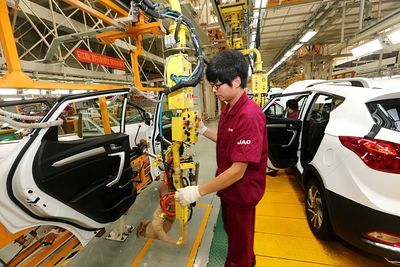
China’s resilience was not created by oil tanks alone. It was built through an energy system that has been transformed over decades. China is now a manufacturing giant in electric vehicles, batteries and solar technology. Its enormous electricity grid has been expanded through ultra-high-voltage transmission lines capable of moving power thousands of kilometres from renewable-rich provinces to industrial centres. The World Economic Forum notes that this system was the result of long-term state-backed investment, industrial policy and enormous infrastructure buildout.
That matters during an oil crisis because not every activity has to continue consuming oil. Electric vehicles reduce gasoline demand. Railways can substitute for domestic aviation. Electricity can replace oil in some industrial processes. China can also lean harder on coal when petroleum supplies become constrained. During the war, Chinese airlines reduced some domestic flights while passenger rail traffic increased. Electric vehicles already represented a substantial share of the country’s vehicle fleet. These changes did not appear overnight. They were the accumulated result of years of industrial policy and infrastructure investment.
The lesson is important: energy security does not necessarily mean producing more of the same fuel. It can mean making the economy less dependent on that fuel in the first place.
There was another, quieter dimension to China’s position. For years, Western sanctions had restricted Iranian and Russian oil exports. China nevertheless emerged as the dominant buyer of discounted barrels from both countries, often through opaque trading networks, independent refineries and alternative shipping arrangements.
China became particularly important to Iran. ORF estimates that while Iranian crude represents only around 12 to 15 percent of China’s total crude imports, China purchases the overwhelming majority of Iran’s internationally traded oil through indirect channels. Beijing has also diversified its sources of crude across Russia, Saudi Arabia, Africa and Latin America. That distinction is crucial. China was not dependent on Iran. Iran was dependent on China as a buyer. This gave Beijing unusual flexibility. It could accumulate discounted oil before the crisis while simultaneously maintaining access to alternative suppliers.
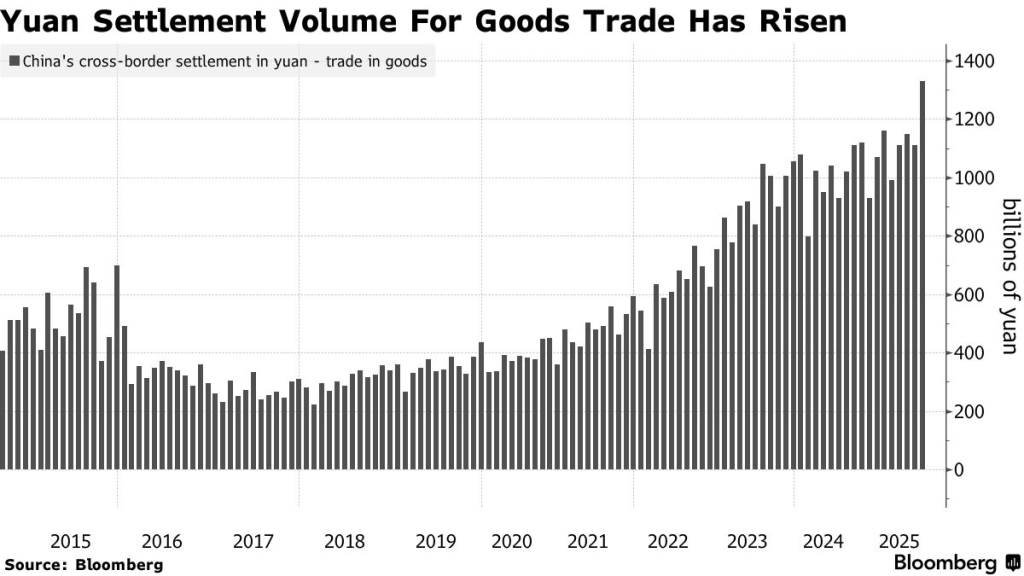
Even currency mattered. Some Iranian oil transactions have been settled in yuan, reducing exposure to the dollar-centred financial system that gives Washington enormous sanctions power. Reuters reported in August that independent Chinese refineries continued buying Iranian oil through opaque routes and settling some transactions in yuan. The result is a geopolitical feedback loop: Western sanctions push Iranian oil toward China, China acquires discounted energy, Beijing strengthens its energy security, and that security eventually gives it more freedom during a crisis.
The remarkable part is that China did not need to save anyone deliberately. This is where the phrase “China saved the world” becomes both compelling and misleading. Beijing did not necessarily reduce its oil consumption because it wanted to rescue America or protect Europe. China’s own economic interests came first.
The Council on Foreign Relations offers a useful explanation. China’s state-directed economic model allowed Beijing to impose decisions quickly, redirect industrial production, reduce refined fuel exports and utilise reserves in ways that would be considerably harder in a more decentralised economy. In effect, China could sacrifice some efficiency in normal times in exchange for resilience during a crisis. That is a fundamentally different philosophy of economic security. Modern market economies often optimise for efficiency: minimise inventories, reduce spare capacity and source goods as cheaply as possible.
China has increasingly done the opposite in strategic sectors. Build excess capacity. Build reserves. Build alternative supply chains. Build domestic manufacturing. Build infrastructure before it is urgently needed. Most of the time, this can look wasteful. During a crisis, it can look like genius.China’s experience during the Iran war therefore exposed something larger than an oil stockpile. It demonstrated the geopolitical value of redundancy.
So did China really “win”? Not in the sense that China defeated Iran’s enemies on the battlefield. The war remains a costly stalemate, and Iran itself paid an enormous price. The United States and Israel inflicted substantial military damage, while Iran demonstrated that it could disrupt one of the world’s most critical waterways and impose costs on the global economy.
But strategically, China emerged with a much stronger hand. The war demonstrated that Beijing can withstand an energy shock that would have threatened its competitors. It showed that China’s huge reserves, industrial capacity, electric vehicle adoption, coal capacity, alternative suppliers and centralised decision-making can work together during a geopolitical crisis. And it revealed something even more consequential about the changing Middle East.
China increasingly does not need to choose between being an American-style security hegemon and staying completely outside regional politics. It can allow Washington to carry much of the military burden while Beijing deepens its economic relationships with the countries around it. As the Jerusalem Post recently observed, Gulf states are increasingly looking for additional security partners while China expands its role as a supplier of infrastructure, technology, vehicles, telecommunications and military equipment. Beijing does not necessarily need to replace America’s military presence. It can benefit from a region in which countries diversify away from exclusive dependence on Washington.
That may ultimately be the real Chinese victory. The United States has traditionally wielded power by controlling the security architecture. Saudi Arabia supplied oil, Washington protected the sea lanes, and the dollar lubricated the entire system. China is building something different. It wants to control factories, batteries, electric vehicles, ports, supply chains, infrastructure, trade and increasingly, the alternatives to the energy systems on which its rivals depend. The Iran war showed what happens when all those investments suddenly become strategic assets.
China did not have to fire the first shot. It simply had to be ready when everyone else discovered how fragile the system was.

