

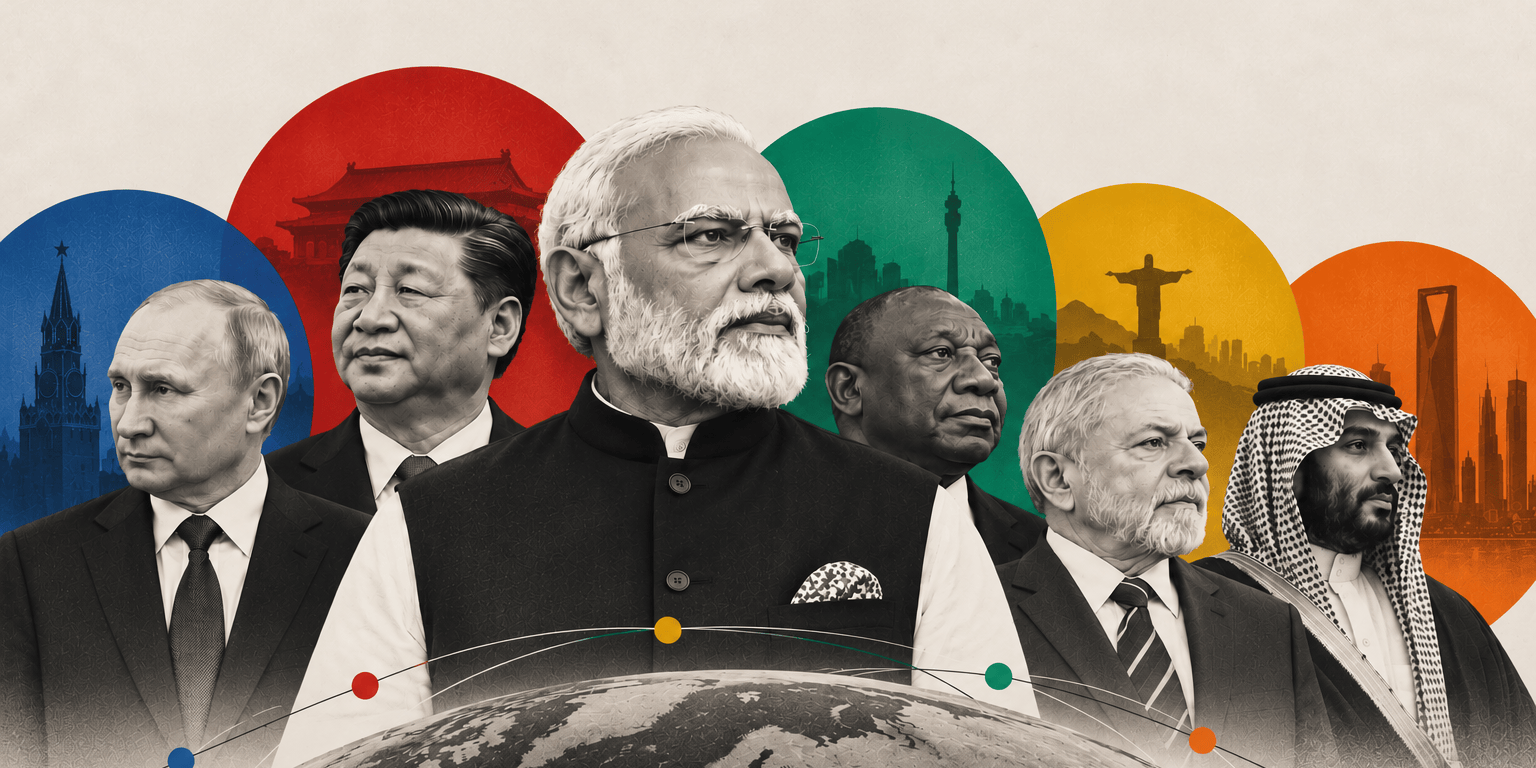
BRICS is increasingly being portrayed as the emerging political and economic counterweight to the West. Its expansion, growing share of the global economy and repeated discussions around de-dollarisation have created the impression that a new bloc is taking shape against the United States and its allies. There is certainly some truth to this interpretation. Several BRICS members want to reduce their dependence on Western financial infrastructure, while the grouping as a whole is demanding greater representation for emerging economies in institutions that have traditionally been dominated by Western powers.
But describing BRICS as an anti-Western alliance misses one of its most important characteristics: its members do not agree on what the grouping should become. BRICS has no collective defence commitment, no common foreign policy and no permanent military structure. More importantly, its members do not share a common position that the West is their adversary. For India, that distinction is crucial. New Delhi does not need BRICS to become an anti-American alliance. It needs BRICS to become another platform through which India can increase its strategic options.
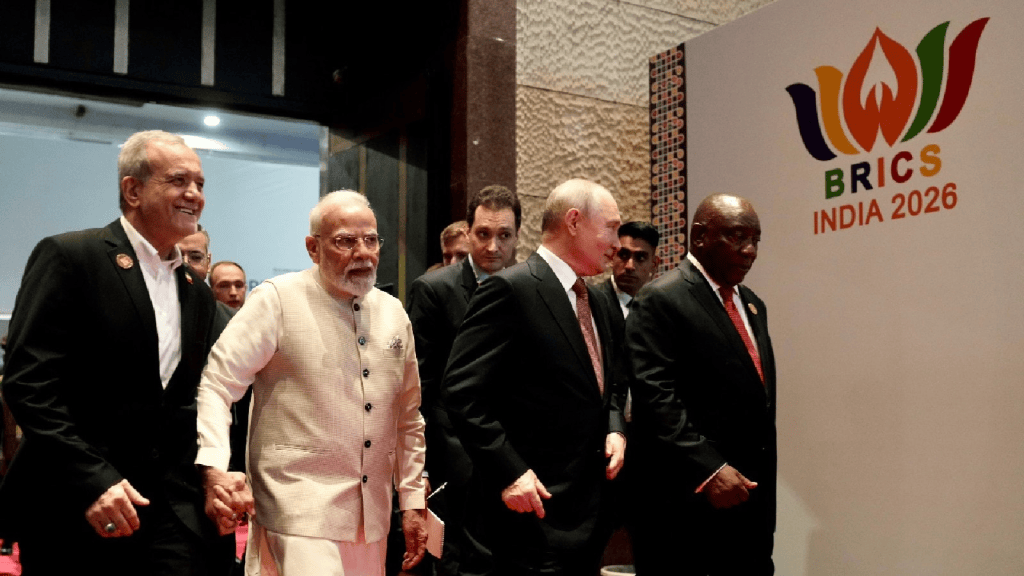
The contradictions within the grouping are already substantial. India and China remain strategic competitors, with an unresolved boundary dispute and a heavily imbalanced trading relationship. Russia has become increasingly hostile towards the Western-led order following the war in Ukraine and the sanctions imposed on Moscow, while India continues to deepen its defence, technology and economic relationships with the United States and Europe. The Gulf members have also pursued relationships with Washington, Beijing and Moscow simultaneously rather than permanently aligning with one side.
This makes the description of BRICS as a unified anti-Western bloc difficult to sustain. For countries such as India, Saudi Arabia and the UAE, participation in BRICS is better understood as diversification. The objective is not necessarily to abandon the existing international system, but to ensure that their foreign-policy and economic choices are not dependent on a single power or institution.
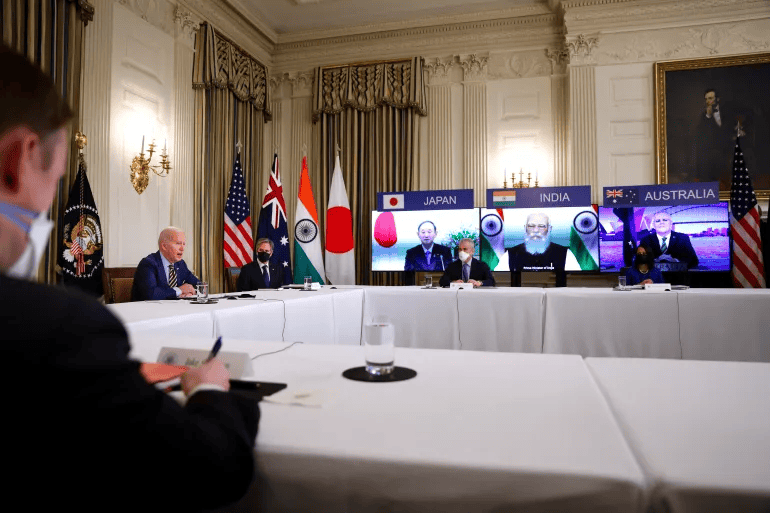
India’s own approach is particularly clear. New Delhi participates in BRICS while simultaneously being a member of the Quad with the United States, Japan and Australia. It has expanded cooperation with Washington in defence, semiconductors and critical technologies, while maintaining close ties with Russia and engaging China through BRICS and the Shanghai Cooperation Organisation. This is not an attempt to balance one alliance with another. It is the continued pursuit of strategic autonomy, adapted to a world in which India itself is becoming a major power.
That is also why India’s interpretation of multipolarity differs from the more confrontational vision coming from parts of the BRICS membership. A multipolar world does not necessarily mean replacing American influence with Chinese or Russian influence. For India, it means creating an international environment in which several major powers possess enough weight to prevent any one of them from dictating the rules.
The distinction becomes particularly important when discussing de-dollarisation. There are legitimate reasons for BRICS countries to reduce their dependence on the dollar. Russia’s experience with sanctions has demonstrated how control over international financial infrastructure can become a source of geopolitical leverage. Other countries have therefore begun exploring ways to increase trade in national currencies and develop payment mechanisms that reduce their exposure to Western financial systems. But there is a considerable difference between reducing dollar dependence and replacing the dollar.
The more dramatic version of the BRICS narrative involves the creation of a common currency capable of challenging the dollar. That remains highly unrealistic. BRICS economies have different monetary policies, inflation rates, fiscal positions and capital controls. A common currency would require an enormous degree of economic and political integration that the members have shown little inclination to accept.
A more practical objective is the expansion of local-currency trade and the development of interoperable payment systems. This is where India has something valuable to contribute through UPI and its broader digital public infrastructure.
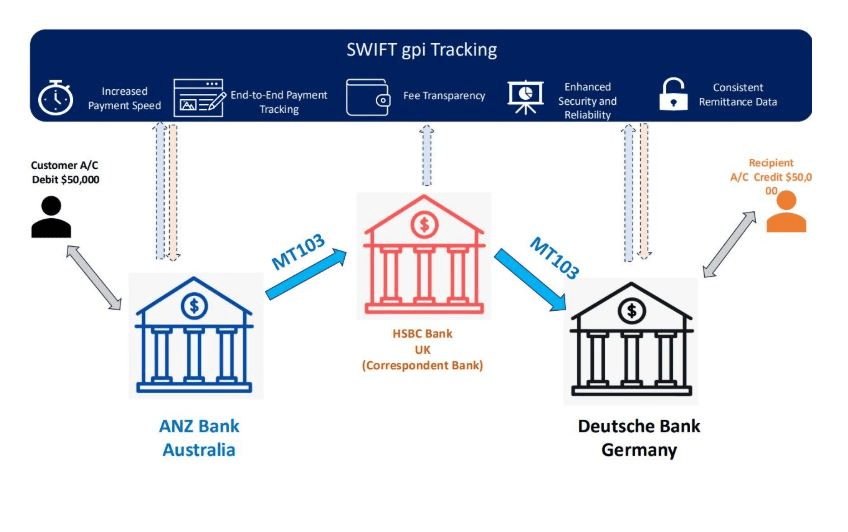
However, UPI should not be confused with SWIFT. UPI is a payment infrastructure designed primarily to enable instant transactions between bank accounts. SWIFT is a global financial messaging network connecting financial institutions and providing the standards through which banks communicate about international transactions. An alternative to SWIFT would therefore require far more than connecting payment applications. It would need correspondent banking relationships, common standards, settlement infrastructure, liquidity and regulatory trust across participating countries.
India can help create alternatives. But the objective should be financial optionality, not simply replacing one dominant system with another.
This is where the economic structure of BRICS becomes important. The grouping is not simply a coalition of developing countries looking for greater trade among themselves. Many of its members are major exporters competing for the same markets, investment and supply chains. China is the world’s manufacturing powerhouse. Russia and the Gulf states are major energy exporters. Brazil is a major agricultural and commodity exporter. India is attempting to expand its manufacturing and services exports while simultaneously importing large quantities of energy, machinery, electronics and intermediate goods.
Consequently, greater intra-BRICS trade is not automatically beneficial to every member. For India, the relationship with China illustrates the problem. If more India-China trade is conducted in rupees and yuan, the dollar component of the transaction may decline, but the underlying trade imbalance remains. India could simply end up importing Chinese machinery, electronics and industrial products in yuan rather than dollars. The currency changes, but the economic dependency does not.
This is why India’s BRICS strategy cannot be reduced to de-dollarisation. New Delhi needs BRICS to improve India’s ability to export, not merely to change the currency in which imports are paid for. Greater access for Indian pharmaceuticals, engineering products, automobiles, electronics, agricultural products and digital services would have a far more tangible impact on India’s economic position. The China question, therefore, sits at the centre of India’s BRICS dilemma.
China is by far the largest economy and manufacturing power within the grouping. Its economic weight gives Beijing the ability to influence the direction of BRICS even without formally controlling its institutions. As the grouping expands, China also gains a larger platform through which to promote its vision of a more multipolar international order. India has an obvious interest in that order becoming more representative. It does not, however, have an interest in a system in which Chinese economic power simply replaces American power at the centre.
This makes BRICS expansion both an opportunity and a challenge. A larger grouping gives India more partners across Asia, Africa, the Middle East and Latin America. It also makes BRICS more representative of the Global South. At the same time, greater membership makes consensus harder and increases the importance of coalition-building within the grouping.
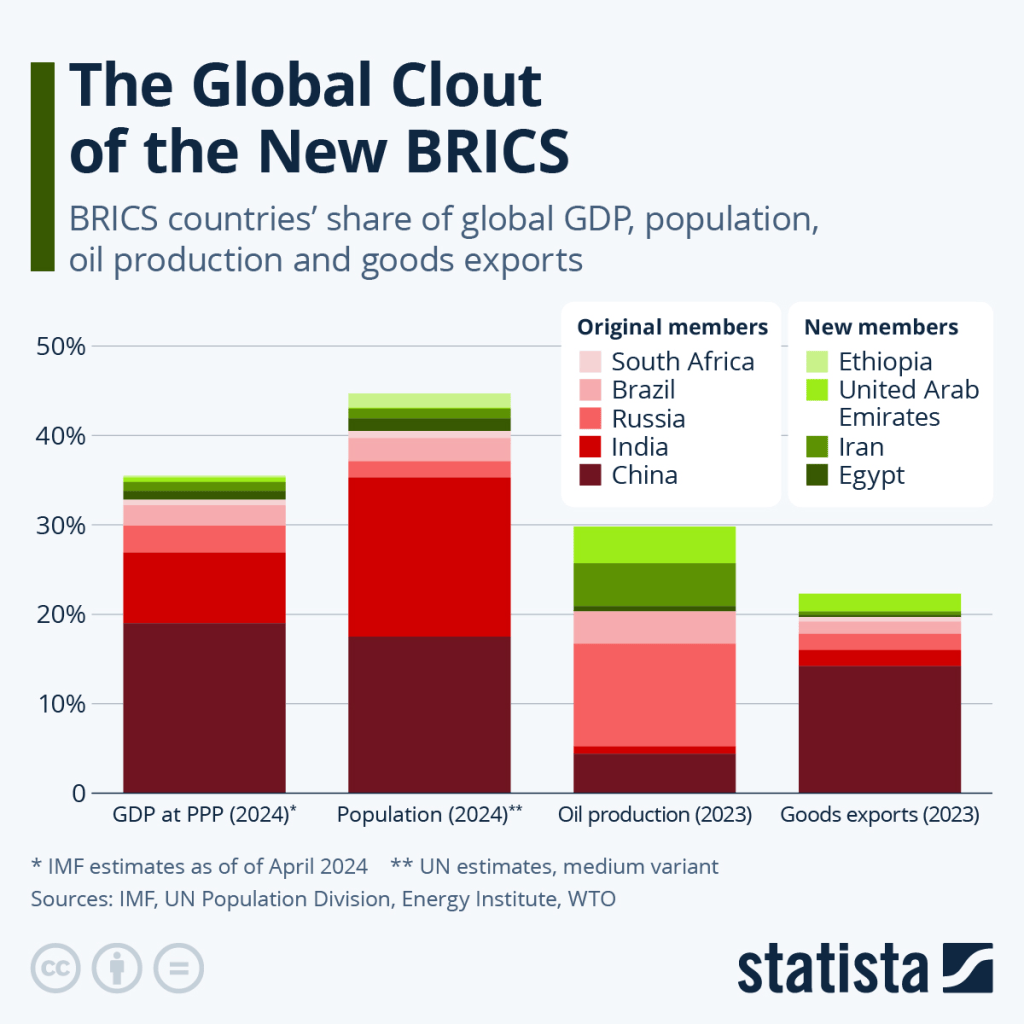
India’s task is therefore not to oppose a stronger BRICS. It is to ensure that “stronger” does not automatically mean “more China-centric.” The first day of the New Delhi Summit provided some evidence that this remains possible. The expanded grouping adopted the New Delhi Declaration despite significant differences among its members. The declaration condemned terrorism, including the Pahalgam attack, while also addressing trade, sanctions, local-currency settlement and reform of global governance. Its language was critical of several aspects of the existing Western-led system, but it did not turn BRICS into an explicit anti-US political alliance.
For India, the significance of the declaration lies precisely in this balance. New Delhi was able to push issues important to it without requiring the entire grouping to adopt an ideological position against the West.
The same balance was visible in the diplomacy surrounding the summit. Prime Minister Narendra Modi held separate meetings with Russian President Vladimir Putin and Chinese President Xi Jinping. The Modi-Xi meeting focused on stabilising India-China relations, the boundary question and economic ties, while the broader BRICS discussions continued to emphasise multipolarity and greater representation for developing countries. These engagements should not be interpreted as evidence of India moving into a China-Russia camp. They demonstrate something more fundamental: India is willing to engage competing powers simultaneously when doing so serves its interests.
That flexibility is increasingly valuable. India can cooperate with the United States on critical technologies while negotiating with China on trade and global governance. It can maintain its longstanding defence relationship with Russia while building closer strategic partnerships with Europe, Japan and Australia. It can work with Iran and the Gulf states while maintaining relationships with Washington. None of these positions requires India to permanently choose one geopolitical camp. The danger for New Delhi would be allowing BRICS itself to become defined by the strategic objectives of another member.
Russia has particularly strong incentives to make BRICS a mechanism for reducing Western financial pressure. China has its own interest in building institutions and payment systems that reduce the influence of the dollar and increase the role of emerging powers. Those objectives overlap with some Indian interests, but not all of them. India wants greater autonomy from the existing international system, but it does not want isolation from it. The distinction is critical because India’s economic rise depends heavily on access to Western capital, technology and markets. India needs the West even as it seeks to reform aspects of the Western-led order.
This is why India’s approach should not be described as pro-Western either. India does not benefit from a world dominated entirely by Washington. Nor does it benefit from one dominated by Beijing. Its strongest position is one in which it can work with both while remaining dependent on neither. The real test for BRICS will therefore not be whether it can produce another declaration criticising unilateral sanctions, nor whether it can announce another initiative on local currencies. The more important question is whether it can produce practical economic and institutional benefits without becoming a geopolitical bloc. For India, that means focusing on areas where BRICS can deliver tangible gains: greater market access, local-currency financing, payment interoperability, supply-chain resilience, technology cooperation, development finance and reform of global institutions. These are more useful to India than an ideological campaign against the dollar or the United States.
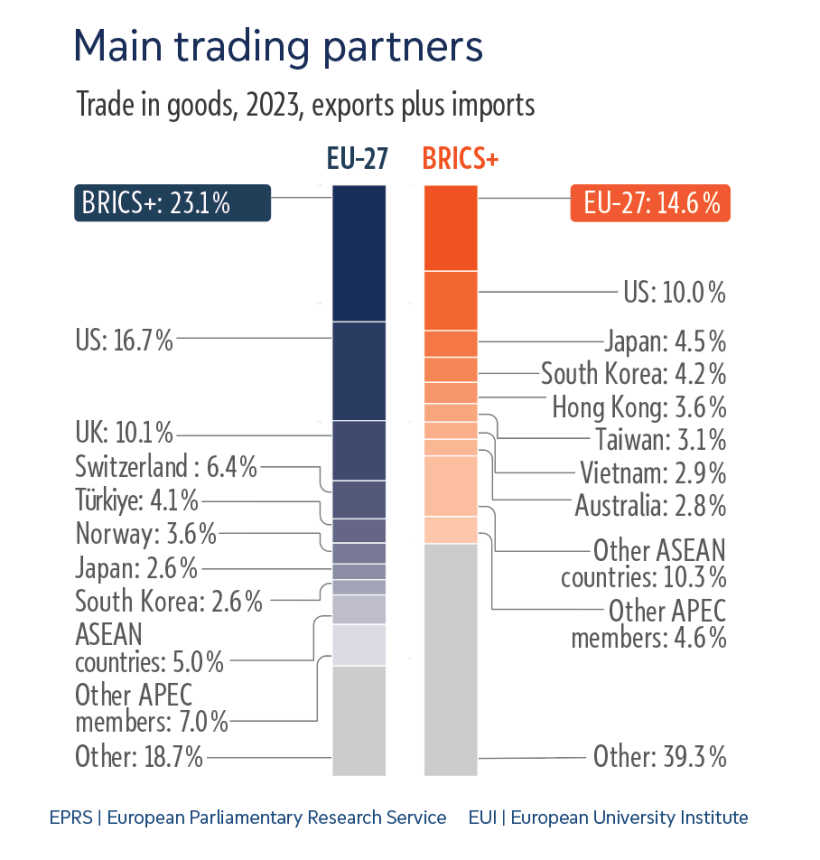
There is also a broader institutional problem. BRICS does not have a central government, treasury or foreign-policy authority. Its members operate through consensus, which makes the organisation less capable of taking decisive collective action but also makes it harder for any one member to impose its entire geopolitical agenda. This weakness can therefore work in India’s favour.
The first day of the summit suggests that India has so far been able to maintain this ambiguity. BRICS has criticised elements of the Western-led system, supported greater use of national currencies and demanded reforms to global governance, but it has not transformed itself into an explicitly anti-Western alliance. India has simultaneously secured issues important to its own interests, particularly terrorism and the broader push for a more representative international system.
Whether that balance survives is the more difficult question. As BRICS becomes larger and develops more substantial financial, technological and trade mechanisms, the stakes will rise. A BRICS that provides India with more choices is valuable. A BRICS that gradually becomes a vehicle for Chinese and Russian geopolitical objectives would be much more complicated. India therefore does not need BRICS to defeat the West. It needs BRICS to increase India’s room for manoeuvre.
That is the real meaning of strategic autonomy in the BRICS era. New Delhi’s objective should not be to preserve the Western-led order, nor to dismantle it in favour of a China-Russia-led alternative. It should be to ensure that India has enough economic, diplomatic and technological options that no major power can dictate its choices. BRICS can help build that world, but only if India can keep the grouping focused on multipolarity rather than turning multipolarity into another word for anti-Americanism.


Hi, Sid, India has a very good approach to BRICS+ I think, holding all possibilities open and preventing one member from being the new “dictator” power. That is why I also think that it is preferable that BRICS+ does not have a joint government. When forced to consensus, the countries can learn about how democracy should work. 😉 Strangely enough, a central government seems to increase the danger of emerging dictators. Look at the USA and the EU. One country/party fighting for absolute power with “legal” means.
LikeLike