

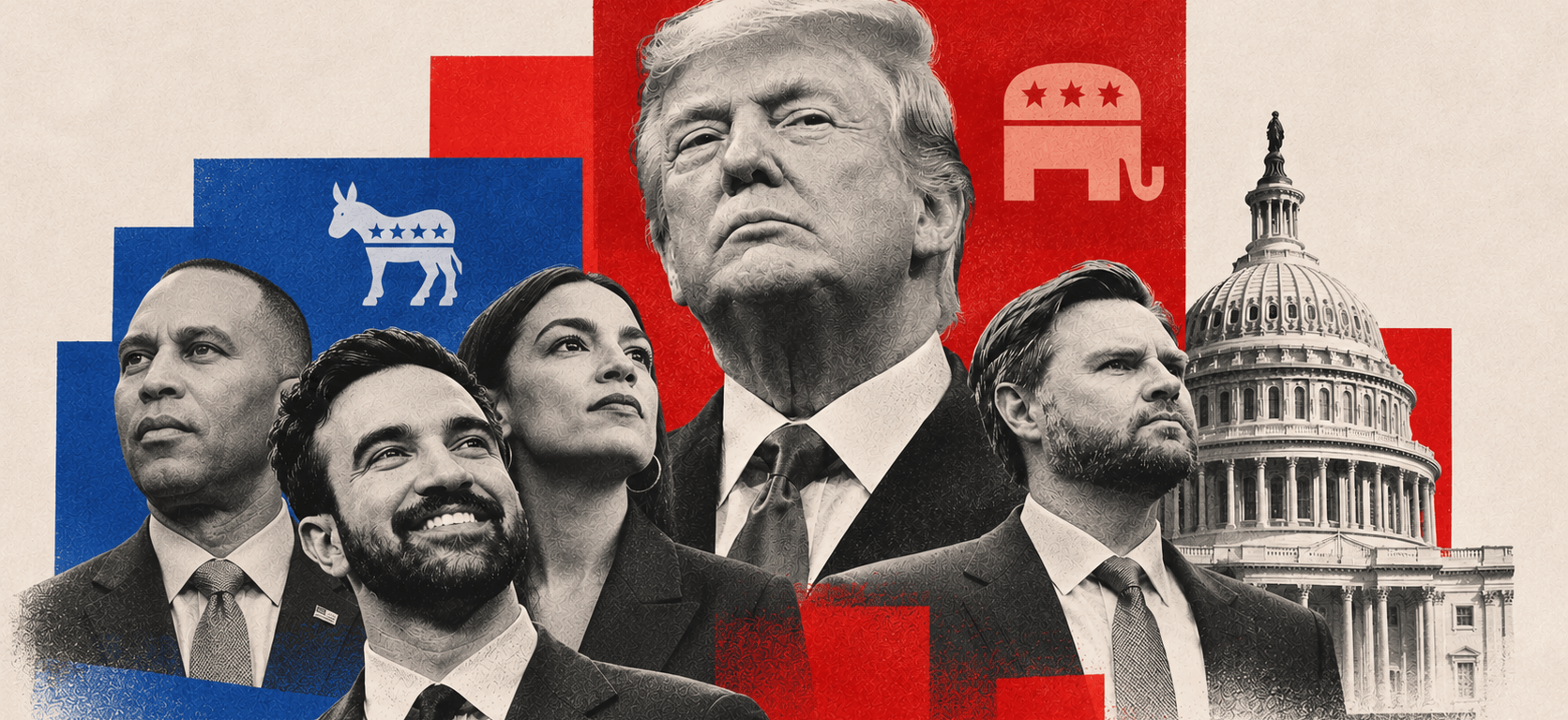
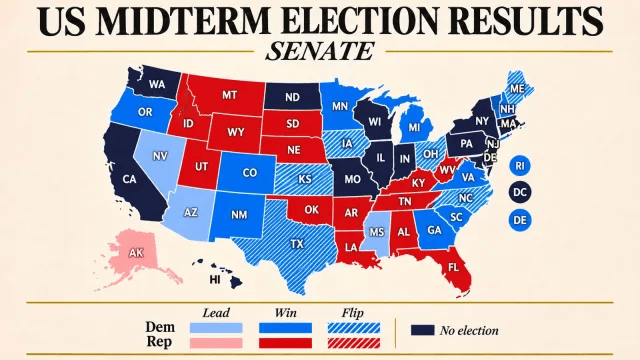
Don’t go by the title, you already know the midterm election results by the time you are reading this but just hear me out. The 2026 US midterm elections have produced a significant shift in Washington. Democrats have won control of both chambers of Congress, flipped seats in states that Donald Trump carried comfortably in 2024, and delivered a considerable setback to the Republican administration. The immediate interpretation is that America has rejected Trump and returned to the Democrats. But that interpretation, while understandable, misses a more interesting aspect of what happened. Democrats won the elections, but that does not necessarily mean the Democratic Party has won over America. Similarly, Republicans lost seats, but that does not mean their political base has disappeared or that Republican voters have suddenly abandoned the ideas that brought Trump to power.
There is a distinction between rejecting a president’s performance and rejecting the political identity of the party he represents. Much of what happened on November 3 can be understood through that distinction. The election exposed the weaknesses of Trump’s governing approach, but it also revealed that the Democratic Party’s national image remains considerably less popular than the success of its individual candidates might suggest. To understand the results, it is worth looking beyond which colour won more seats and examining why people voted the way they did.
MAGA’s problem was governing, not necessarily its original appeal
Trump’s political success was built around a fairly straightforward argument. Washington had become disconnected from ordinary Americans. The political establishment was more interested in its own survival than in addressing economic insecurity, rising prices and declining opportunities. Foreign commitments were draining resources, while working families were struggling to get ahead. For voters who felt ignored by both parties, Trump’s promise to disrupt the existing system had considerable appeal.
The problem emerged when that movement had to translate its promises into governance. One of the more revealing interviews in the supplied material features conservative writer Rod Dreher, who supported Trump in 2024 but now argues that MAGA failed to deliver good government. He points to the tariff announcements of April 2025 as an early indication of a governing style increasingly driven by instinct rather than considered economic judgement. He also highlights the administration’s preference for personal loyalty over competence and its inability to convert much of its initial legislative opportunity into durable policy.
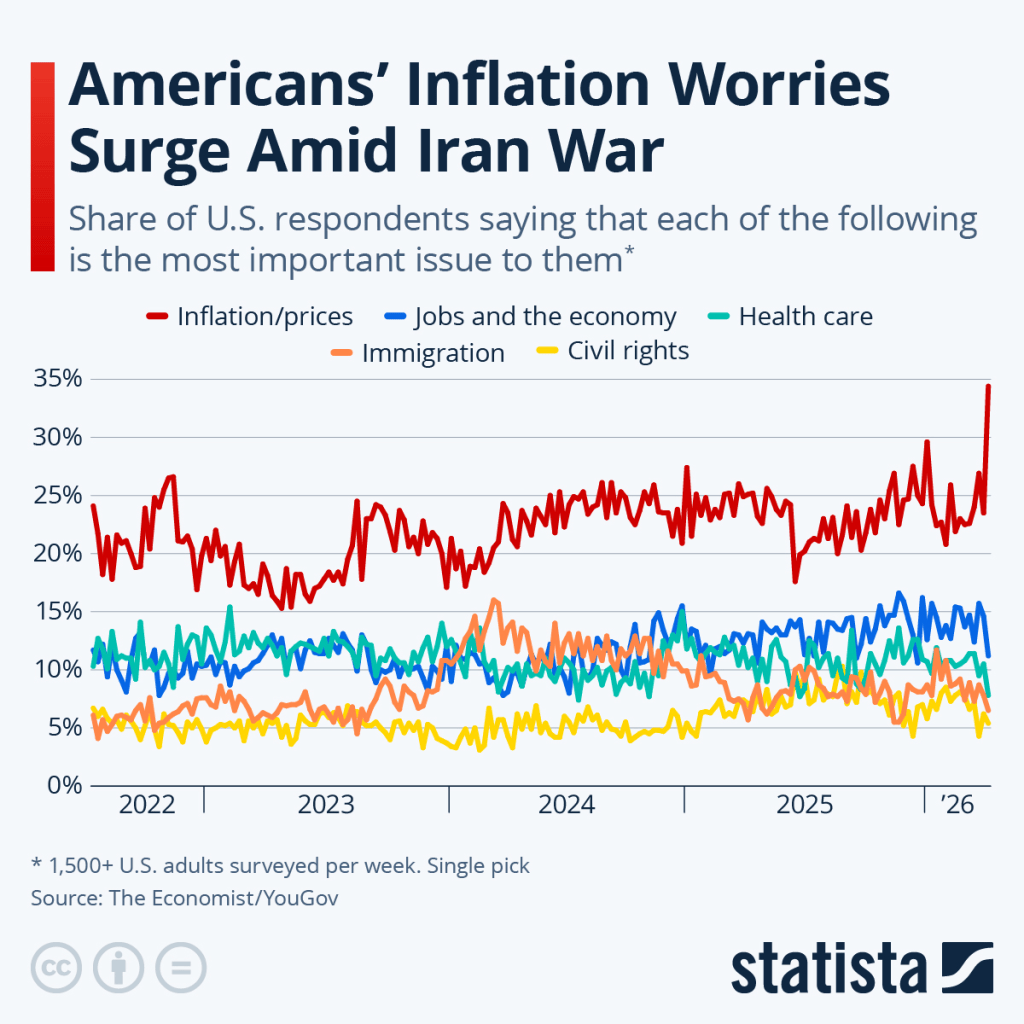
The economic frustration that followed was particularly consequential. Trump had campaigned on bringing down grocery prices and making everyday life more affordable. However, tariffs introduced uncertainty and added to concerns about the cost of imported goods. Rather than acknowledging the frustration, Trump repeatedly dismissed affordability as a political talking point manufactured by Democrats. But voters did not need politicians to tell them that things were becoming expensive. They could see it in their household budgets.
The Iran war added another contradiction. A section of Trump’s electorate had supported him precisely because they expected a departure from the foreign policy interventions associated with previous administrations. The conflict, rising fuel prices and the administration’s changing explanations created questions about whether the president was delivering what he had promised. JD Vance’s subsequent statement blaming the war for Republican losses was particularly revealing, given his own association with the administration. But the problem had begun before the conflict. The economic dissatisfaction was already present, and the war intensified it.
Perhaps the biggest mistake in interpreting these elections would be to assume that voters who supported Democratic candidates have suddenly become Democrats. American political identity is considerably more complicated than that. Party loyalty remains powerful, and many voters can be unhappy with their president while continuing to identify with the broader ideological principles of their party.
A Washington Post and NORC survey of more than 90,000 voters provides an interesting perspective. It found that Republicans and Democrats continued to overwhelmingly favour their respective party’s candidates. In four states where Democrats flipped Senate seats, approximately one in ten Trump voters supported the Democratic Senate candidate. Independents, meanwhile, backed Democratic candidates by a margin of more than 20 percentage points. This suggests that the Democratic victories were driven substantially by independents, dissatisfied voters and people who had either stayed home or moved between parties, rather than by a wholesale conversion of the Republican electorate.
The divisions within the Republican Party are real, but they should not be confused with the disappearance of its constituency. Even before the midterms, a Brookings analysis found that 62 per cent of rank-and-file Republicans identified with MAGA. A September survey by the University of Massachusetts Amherst also found that a majority of Republican respondents continued to identify with the movement, although support had declined since March. There is clearly dissatisfaction, but there remains a substantial conservative electorate with an attachment to the movement and its underlying ideas.
The interviews with young Republicans in Texas offer another interesting dimension. Some were still strongly committed to Trump, others were disappointed with his presidency but remained Republican, and some had rejected him altogether. Interestingly, a section of the younger conservative movement was not looking for a return to traditional Republicanism. They wanted to take the movement further to the right. This makes the future of the Republican Party much less straightforward than the idea that MAGA has simply ended.
The real question for Republicans is whether they can separate the broader conservative coalition from Trump’s increasingly personalised political project. Immigration, national sovereignty, cultural conservatism, distrust of established institutions and economic dissatisfaction are not concerns that disappear because a president loses a midterm election. Someone else could attempt to organise those voters around a different leadership style and a different governing programme. The party has lost its congressional advantage, but the electorate that gave it that advantage has not simply ceased to exist.
Democrats won because their candidates connected with voters, not because their national brand suddenly became popular
This is perhaps the most important part of the election that deserves greater attention. Democrats certainly won control of Congress, but it would be inaccurate to attribute every victory to a sudden resurgence in the popularity of the national Democratic Party.
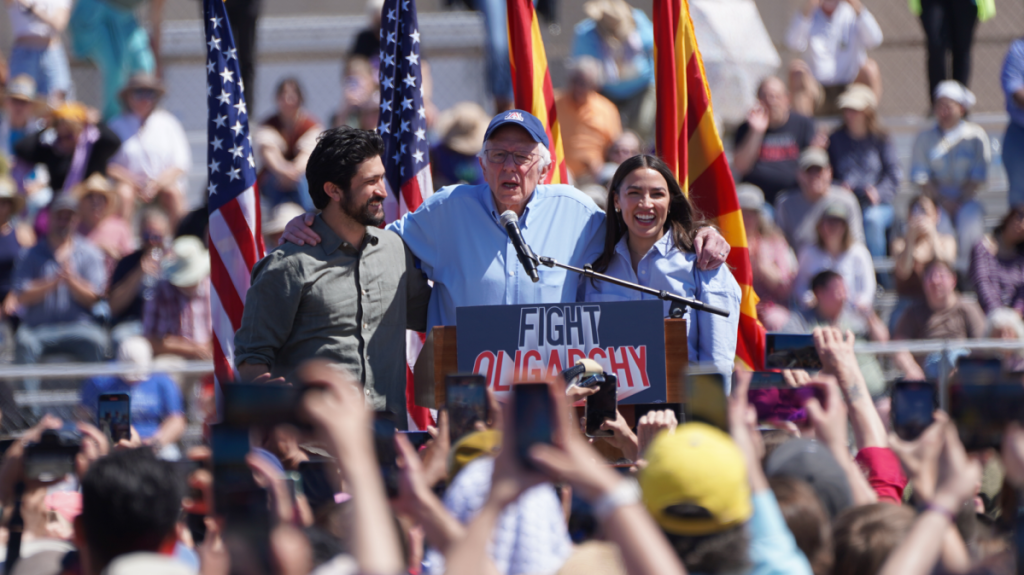
A November 6 Searchlight Institute entrance poll offers an especially interesting finding. Its analysis of seven key swing states found that Democratic candidates who differentiated themselves from the national party brand performed particularly well. In five of the six Senate races for which favourability comparisons were available, the individual Democratic candidate was viewed more favourably than the national Democratic Party. In several states, the difference was substantial. The researchers also found that candidate favourability was more closely correlated with vote choice than ideological positioning.
That distinction deserves attention. Voters might not particularly like the Democratic Party, but they can still like the Democratic candidate standing in their state. They might disagree with the party leadership but trust a local candidate who understands their community, speaks about the issues affecting their families and is willing to engage with them directly.
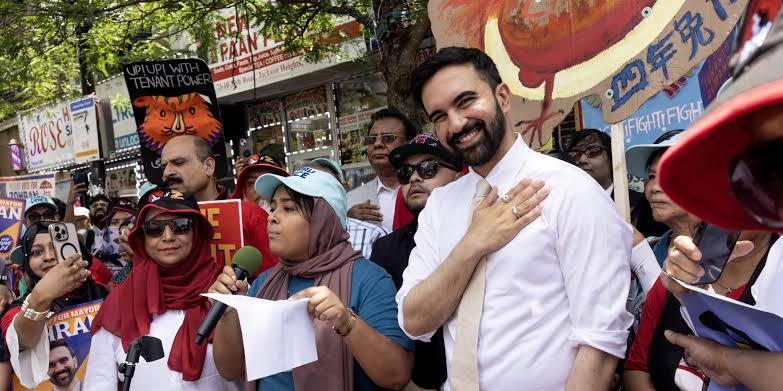
The campaigns highlighted in the supplied transcripts repeatedly demonstrate this. Instead of making every election a referendum on Trump’s personality, candidates increasingly focused on grocery bills, housing costs, healthcare, wages and corporate influence. Zohran Mamdani’s affordability-focused campaign in New York became an example of how economic issues could be communicated in straightforward language. Candidates such as James Talarico in Texas and others in Michigan and Kansas developed their own approaches, connecting national economic concerns with issues their respective constituencies cared about.
There was also a difference in how some of these campaigns engaged with voters. One of the transcripts describes Abdul El-Sayed holding more than 700 public events in Michigan, while James Talarico organised hundreds of events in Texas. These were not simply campaign advertisements or carefully scripted television appearances. They involved speaking to people, listening to their frustrations and remaining available when conversations became uncomfortable. That kind of ground-level engagement helped candidates establish their own credibility.
Reuters’ post-election reporting also points to an important organisational element. Democratic leaders invested in state-level party organisations and expanded their efforts beyond traditional battlegrounds. Some successful candidates had initially been considered such long shots that the national party had barely engaged with their campaigns. The victories therefore reflected a combination of broader organisational investment, local candidate strength and a favourable political environment.
The important point is that voters were responding to candidates who made an effort to understand their problems. They were not necessarily endorsing everything associated with the Democratic Party nationally. The election was fought seat by seat, and in many places, individual candidates gave people a reason to vote for them that went beyond simply opposing Trump.
The fact that individual candidates performed well does not mean the Democratic Party’s organisational and political problems have disappeared. In fact, the election may have temporarily hidden some of them. CBS News exit polling found that just over half of voters still viewed the Democratic Party unfavourably. That is a remarkable contrast with the scale of the party’s electoral success. It suggests that many Americans were willing to vote Democratic without necessarily having a particularly positive impression of the party itself. The distinction between liking a candidate and trusting a political organisation is important, especially when considering what happens after the election.
The transcripts also raise a concern about the absence of a coherent national Democratic agenda. Several candidates developed their own economic proposals and messaging because the national leadership had not provided a sufficiently clear framework that could unite the party. This allowed individual campaigns to be effective, but it also meant that Democratic electoral success was not always accompanied by a shared understanding of what the party intended to accomplish.
This is where Democrats need to organise better at the national level. They need more than a collection of successful candidates and an opposition to Trump. They need a common economic direction that can connect local campaigns across the country without forcing every candidate to adopt identical positions. Housing, healthcare, wages, retirement security, corporate accountability and the cost of everyday essentials are areas where such a common framework can emerge.
The party also needs a recognisable national political identity. It cannot rely entirely on individual candidates to develop their own appeal while the national leadership remains unpopular. There has to be some consistency between what a Democratic candidate promises in Texas, what another promises in Michigan and what the party’s congressional leadership is actually prepared to pursue in Washington. Local flexibility is important, but it needs to sit within a broader national programme.
Most importantly, the relationship with voters cannot begin a few months before the next election. The public events, local meetings and community engagement described in the transcripts should become a permanent part of the party’s political organisation. Democrats need to remain present in communities even when there is no immediate electoral reward. Winning a constituency requires understanding it long before asking it for votes.
Neither party can afford to misread the result
The Republican Party faces an internal debate about its future, while Democrats face the challenge of turning an electoral victory into a coherent governing programme. Both parties have reasons to examine the results beyond the immediate distribution of seats.
For Republicans, the defeat raises questions about leadership, foreign policy, economic priorities and the role of Trump’s personality in shaping the party. It also provides an opportunity for different conservative factions to argue over what comes next. JD Vance, Ron DeSantis and other potential successors represent different directions within that debate. The party’s future will depend on whether it can reconcile those competing visions without assuming that Trump’s voters will automatically follow whichever figure inherits his political machinery.
For Democrats, congressional control brings an equally important responsibility. Investigating the administration, exercising oversight and scrutinising executive power will be part of their mandate. But investigations cannot substitute for an economic programme. Voters who supported Democratic candidates because of rising costs, healthcare concerns and dissatisfaction with the administration will expect tangible action. They have not given the party an unlimited mandate simply because they voted against Republicans.
The 2026 midterms therefore tell a more complicated story than either party’s celebrations or post-election blame game might suggest. Trump’s administration suffered a substantial electoral rejection, and candidates associated with his governing record paid the price. But the Republican electorate remains a significant political force. Democrats, meanwhile, demonstrated that strong local candidates, economic messaging and direct engagement can overcome an unpopular national party brand. Whether they can turn that combination into a sustainable political movement is still an open question.
Perhaps the most important lesson is that American voters have not necessarily changed their political identities as much as they have changed their expectations of the people representing them. Republicans cannot assume that loyalty to their party will protect candidates from the consequences of poor governance. Democrats cannot assume that dissatisfaction with Republicans automatically translates into lasting support for their own party. The next two years will reveal whether either side has understood that distinction.

