


The 2024 Olympic Games in Paris have become a stage for showcasing not just athletic prowess but also the geopolitical dynamics and tensions that shape our world today. The French President, Emmanuel Macron, has used the event to project a vision of France that is diverse, cosmopolitan, and modern, yet rooted in its rich cultural history. The opening ceremony encapsulated this vision, blending iconic French landmarks and historical figures with representations of contemporary French culture, including surfers, rappers, and members of the LGBTQ+ community.
However, Macron’s vision has not been universally accepted within France. The opening ceremony’s depiction of a diverse and inclusive France sparked backlash from both the extreme left and right. The extreme left criticized what they saw as Macron’s globalist tendencies, while the extreme right decried the inclusion of LGBTQ+ elements, with some viewing it as an affront to traditional French values and religious sentiments.

Geopolitical Repercussions and Domestic Discontent
The ceremony’s portrayal of Leonardo da Vinci’s The Last Supper, featuring drag queens, a transgender model, and a naked singer, drew particular ire from France’s Catholic church, which condemned it as a “mockery of Christianity.” The controversy extended beyond France, with criticism from some Muslim communities and Chinese state media’s silent protest during LGBTQ+ segments. These reactions underscore the broader geopolitical tensions and cultural clashes that the Olympics often bring to the fore.
The decision to ban Muslim women from wearing hijabs while competing for France, citing secularist principles, further inflamed tensions. This decision came amid heightened sensitivity following the October 7 Hamas-led attacks and Macron’s symbolic gestures towards the Jewish community, such as inviting France’s chief Rabbi to light Hanukkah candles at the Élysée Palace.
Global Reactions and Diplomatic Tensions
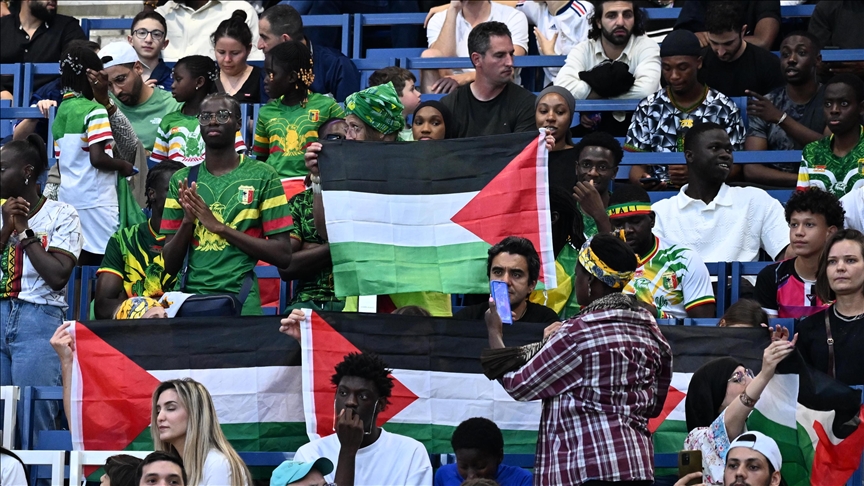
The geopolitical implications of the 2024 Olympics extend far beyond France’s borders. During a football match between Mali and Israel, protests erupted with banners condemning Israel and supporting Palestine, reflecting the complex interplay of international conflicts and domestic politics. The limited participation of Russian and Belarusian athletes, following doping scandals and the invasion of Ukraine, also highlights the ongoing geopolitical strife. While some athletes compete as neutrals, the absence of national symbols underscores the punitive measures against Russia, which have broader implications for international diplomacy and sportsmanship.
The speculation that Russian agents might have been behind railway sabotages on the opening day of the Games, though unconfirmed, points to the ongoing covert geopolitical maneuvers aimed at undermining the host nation’s image. This echoes past disruptions, such as the chaos at the 2022 UEFA Champions League final, suggesting a pattern of targeted actions against France.
The Olympics as a Political Stage, always
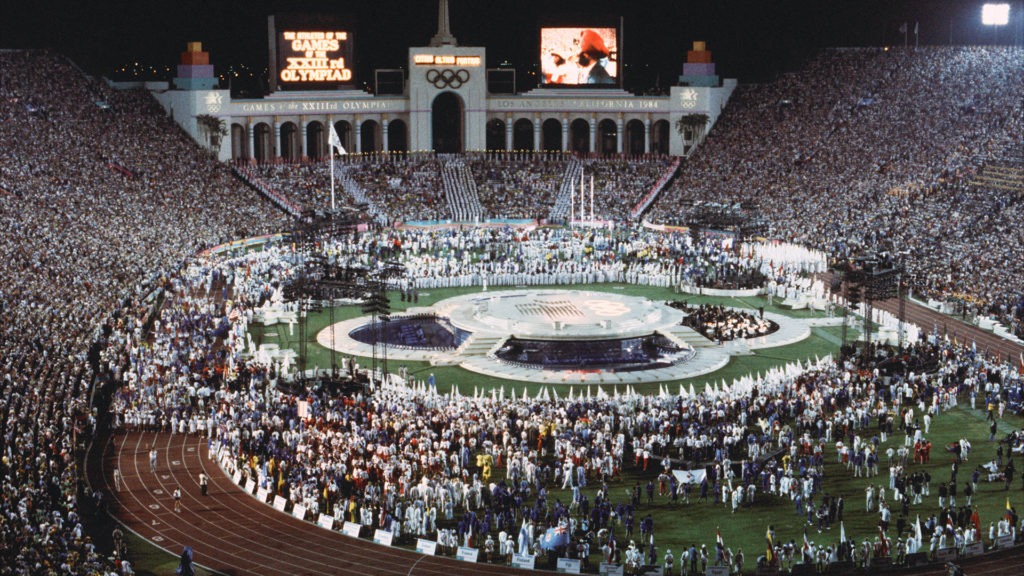
The Olympics have always been a platform for geopolitical expression. From the 1980 U.S. boycott of the Moscow Olympics to the 1968 Black Power salute by American runners, the Games reflect the political climate of their times. The 2024 Paris Olympics are no exception. They provide a stage for nations to assert their influence and for political statements to be made, whether through protests, boycotts, or the mere presence or absence of certain countries. 1980 Moscow Olympics saw a significant boycott led by the United States in response to the Soviet invasion of Afghanistan. Over 60 countries joined this boycott. In retaliation, the Soviet bloc boycotted the 1984 Los Angeles Olympics. These boycotts underscored how deeply political conflicts could infiltrate the world of sports, highlighting the Olympics’ potential as a platform for political statements, whether by nations or individual athletes.
One of the most iconic images of the intersection between sports and social justice is Tommie Smith and John Carlos raising their fists in a Black Power salute during the 1968 Mexico City Olympics. This tradition of protest through sports has continued, as seen more recently with athletes like Colin Kaepernick kneeling during national anthems to protest racial injustice. Beyond rivalries and protests, the Olympics offer a unique avenue for diplomatic engagement. The tradition of the Olympic Truce, which dates back to ancient Greece, calls for a cessation of hostilities during the Games to promote peace and cooperation. Although this ideal is not always achieved, it underscores the Olympics’ role in fostering international dialogue and understanding. The Games provide neutral ground where countries can engage in informal diplomacy. They create opportunities for leaders to meet and for nations to strengthen or mend their diplomatic ties. The 2018 PyeongChang Winter Olympics in South Korea, for instance, saw a rare moment of diplomacy between North and South Korea, with athletes from both countries marching together under a unified flag.

The IOC’s strong stance against the politicization of the Games often clashes with the reality of international relations. The inclusion of athletes from smaller, lesser-known countries has political ramifications, as seen with Kosovo’s 2016 success in women’s judo, which bolstered its bid for international recognition. The exclusion of Russian athletes from the 2024 Olympics is intended as a sanction against the country’s actions in Ukraine, although its practical impact on international relations is debatable.
The Business of the Olympics
Beyond the political and cultural dimensions, the Olympics are a massive business enterprise. The International Olympic Committee (IOC) generates significant revenue, primarily from broadcasting rights and sponsorships, amounting to $7.6 billion for the latest four-year cycle ending with the Tokyo Olympics. However, the distribution of this wealth is often contentious, with athletes receiving only a small portion of the income, sparking debates about fair compensation.
Hosting the Olympics is a costly endeavor, with the Paris Games following the trend of escalating expenses. The cost of staging the Games often exceeds initial estimates, burdening host nations and raising questions about the long-term benefits. Critics argue that the funds spent on the Olympics could be better allocated to pressing domestic needs, such as healthcare and education.

The Olympics have also been marred by scandals and corruption, further complicating their role as a symbol of global unity and peace. From the bribery scandal surrounding the Tokyo Games to the state-run doping cover-up in Sochi 2014, these controversies tarnish the Olympic ideal. The IOC’s observer status at the United Nations reflects its self-perceived importance, but also its susceptibility to political and economic pressures. The bidding process for hosting the Games has also come under scrutiny. The high costs and logistical challenges have led many cities to withdraw their bids, leaving the IOC with limited options.
The 2024 Paris Olympics illustrate the complex interplay of sports, politics, and business on a global stage. They reflect not only the aspirations and challenges of the host nation but also the broader geopolitical dynamics that shape our world. As the Games progress, they will continue to serve as a mirror of international relations, showcasing both the potential for unity and the deep-seated divisions that persist.
The IOC’s efforts to maintain the apolitical nature of the Olympics are continually challenged by the realities of global geopolitics. The Games offer a unique opportunity for cultural exchange and diplomacy, but they also expose the fractures and conflicts that define our era. As the world watches Paris 2024, the true legacy of the Olympics will be shaped not just by the athletes’ performances, but by the political and social narratives that unfold alongside them.
 vision of sid
A very well written and researched article again, Sid!
I sometimes feel that all these international competitions and championships make the gaps wider. I hope I am wrong.
LikeLike