

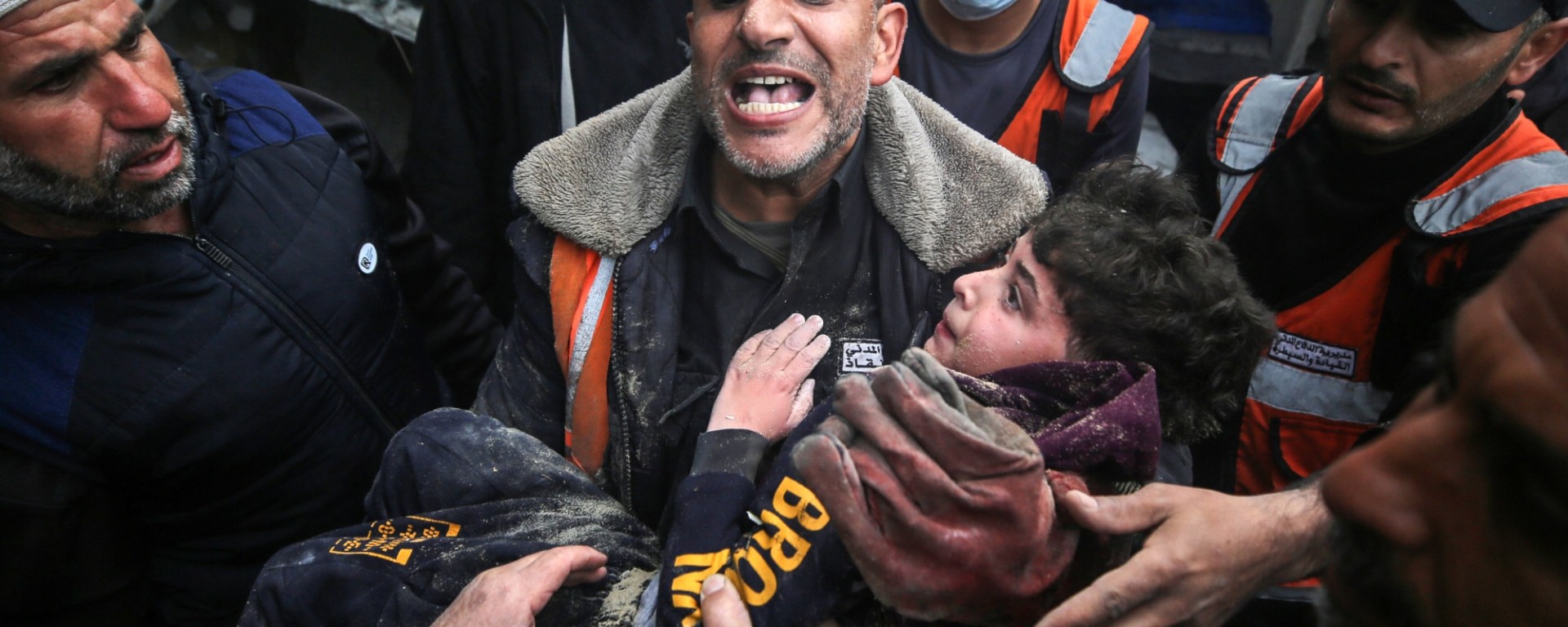
Historically, a conflict has often been described as armed confrontations primarily occurring between independent nations. According to this perspective, warring nations can cease hostilities at their discretion while maintaining their sovereignty. However, the situation surrounding the Gaza war presents a more intricate scenario. Despite not being recognized as a sovereign entity, Hamas, the predominant authority in the Gaza Strip, they launched a surprise assault on Israel in October 2023. This offensive resulted in the loss of approximately 1,200 lives and the abduction of over 200 individuals. Subsequently, Israel responded with retaliatory strikes, resulting in an estimated death toll of 30,000 by February’s end. The question arises: to what extent did Hamas consider its governing responsibilities in Gaza while preparing for the offensive?
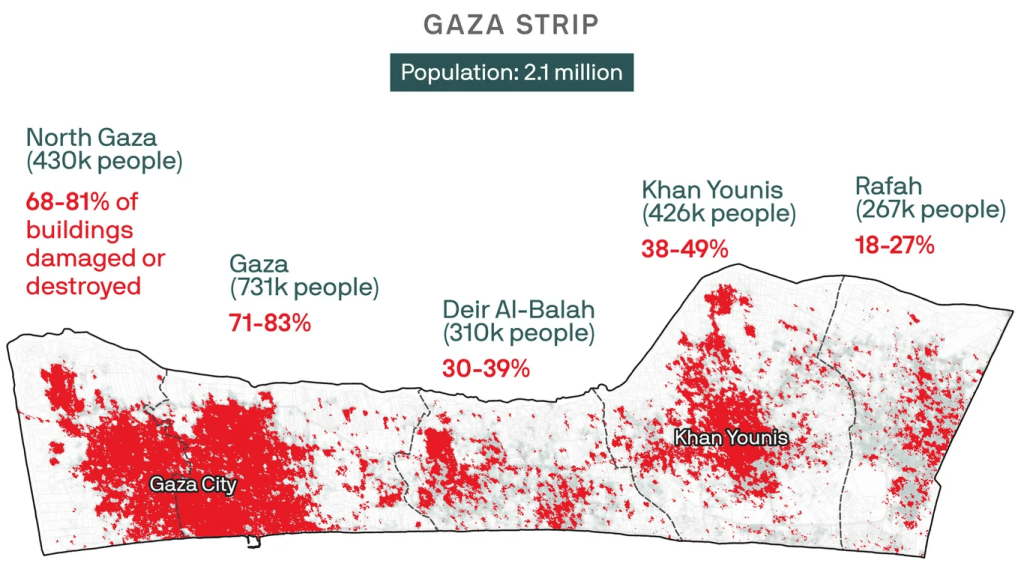
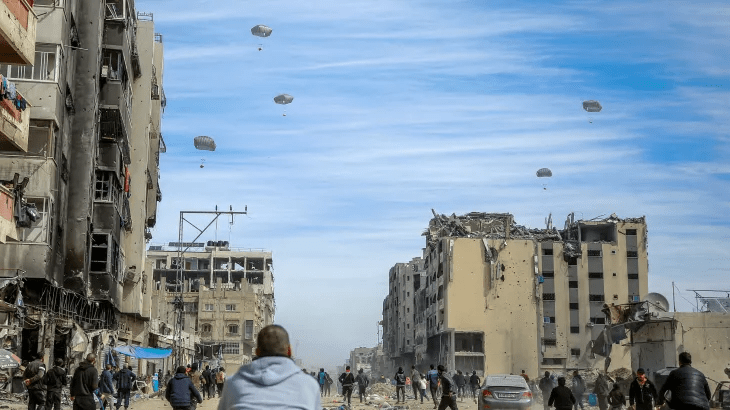
There is a significant shortage of food in Gaza. According to the Integrated Food Security Phase Classification (IPC), over 2 million people are at imminent risk of famine. Of these, some 378,000 people are at phase 5 (‘catastrophic’ levels, referring to extreme lack of food, starvation, and exhaustion of coping capacities) and 939,000 people are at phase 4 (emergency levels). The United States air-dropped 36,000 meals into northern Gaza in collaboration with Jordan, marking the second such joint effort in recent times. This action followed a statement by the World Health Organization the previous day, highlighting the dire situation where children were succumbing to starvation in the north. Approximately 300,000 Palestinians reside there, facing severe shortages of food and clean water. However, the air-dropping strategy has sparked significant debate, as humanitarian organizations argue that it is insufficient to address the growing needs. It also highlights the shortcomings of the existing aid efforts on the ground. While aid convoys have been permitted to enter southern Gaza through the Egyptian-controlled Rafah crossing and the Israeli-controlled Kerem Shalom crossing during the conflict between Israel and Hamas, the north, which bore the brunt of the initial phase of the Israeli ground offensive, has largely been cut off from assistance in recent months.
On February 20, the World Food Programme (WFP) announced the suspension of food deliveries to northern Gaza due to incidents of “complete chaos and violence” during its aid convoys over the past three weeks, including violent looting. Over 100 Palestinians lost their lives as crowds attempted to reach an aid convoy led by private contractors, escorted by Israeli forces west of Gaza City. Palestinian health authorities reported numerous fatalities due to Israeli forces’ gunfire. In response, Israel’s military stated that most casualties resulted from being trampled or struck by aid vehicles. They added that soldiers fired towards individuals deemed threatening as they approached the aid convoy. However, the WFP disclosed that its attempt to deliver food supplies to northern Gaza was thwarted by the Israel Defense Forces (IDF).
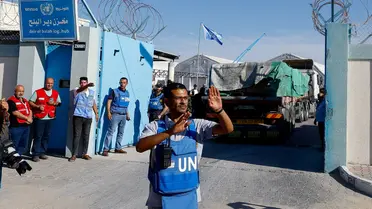
UNRWA is crucial in delivering humanitarian aid to Gaza and surrounding areas. However, Israeli intelligence reports suggest that a significant number of UNRWA employees have alleged ties with Hamas. In a recent announcement, President Joe Biden revealed plans for the US military to construct a temporary port in Gaza to facilitate the delivery of more humanitarian aid by sea. This initiative aims to increase the daily volume of aid to Palestinians by “hundreds of additional truckloads,” according to officials. President Biden emphasized that no US troops would be deployed in Gaza. Additionally, the UK pledged to collaborate with the US in establishing a sea corridor for aid delivery.
The conflict between Hamas and Israel initially manifested as retaliatory actions driven by a desire for vengeance. However, it has evolved into a politically and morally complex war, threatening the prospect of statehood for the defeated party. Israeli forces have displaced Palestinians from northern Gaza into the Rafah area near Egypt, resulting in an unprecedented number of civilian casualties. Such extensive military operations are poised to face harsh criticism in the annals of history. Nonetheless, Hamas, positioning itself as a Palestinian nationalist entity, cannot evade political accountability for the substantial loss of life among Gaza’s populace. Hamas is also an armed Islamist group, purportedly aligned with Iran’s anti-U.S. and anti-Israel stance as part of the “Axis of Resistance,” which includes Lebanon’s Hezbollah, Syrian militias supported by Iran, and Yemen’s Houthi rebels. While the United States and Israel have conducted retaliatory actions against Iran-affiliated groups, they have notably refrained from confrontation with Iran itself. The plight of Gaza’s residents has been exacerbated by their entanglement in a broader regional conflict, serving as pawns in the geopolitical manoeuvring between Iran, the United States, and Israel.

The interdependence between Russia and Iran in the Ukraine and Syrian conflicts contrasts with their relationships with Israel and Saudi Arabia. However, diplomatic complexities have prevented any direct military intervention in Gaza by authoritarian or democratic blocs. In light of these challenges, efforts must be directed towards resolving the Israeli-Palestinian conflict diplomatically. Revisiting the principles of the 1993 Oslo Accords, which advocated for a two-state solution, and integrating Gaza into the Saudi-led initiative for coexistence with Israel are imperative steps.
Gaza’s pursuit of self-determination and survival hinges on liberation from the oppressive rule of Hamas. The two-state solution, conceived in the 1990s, necessitates compromise and trust-building between Palestinian and Israeli leaders. Despite criticisms levelled against Palestinian President Mahmoud Abbas, his administration has refrained from terrorist activities, making it a more viable governing alternative to Hamas. In contrast, Israeli Prime Minister Benjamin Netanyahu remains opposed to a two-state solution, prioritizing the expansion of Israeli settlements in the West Bank. His political ambitions and legal challenges further complicate efforts to achieve peace. International pressure, particularly from the United States under President Joe Biden’s leadership, is essential to advance the two-state solution. However, Israeli public opinion, as evidenced by parliamentary resolutions and opinion polls, presents a significant obstacle.
 vision of sid
A very well researched article again, Sid! Clearly, a two state situation would be the solution, but Hamas would have to be dissolved. How? Somebody is delivering weapons to them. How do these go through to them, but some of the food convoys don’t? Seems like Iran is their main source.
LikeLike