

The Gaza Strip, a narrow strip of land on the Mediterranean coastline, has been a longstanding epicenter of conflict in the Middle East. The latest surge in hostilities, commencing in early October 2023, has once more drawn global focus to this volatile area. The Israeli-Palestinian conflict dates back to the mid-20th century and is rooted in competing national aspirations and territorial claims. The establishment of the State of Israel in 1948 led to the displacement of hundreds of thousands of Palestinians, creating a protracted refugee crisis that continues today. The conflict has been characterized by sporadic outbreaks of violence, territorial disputes, and failed peace negotiations. In the 1990s, there were hopes that peace might come if an independent Palestinian state could be established alongside Israel, the so-called two-state solution. The attempt failed.

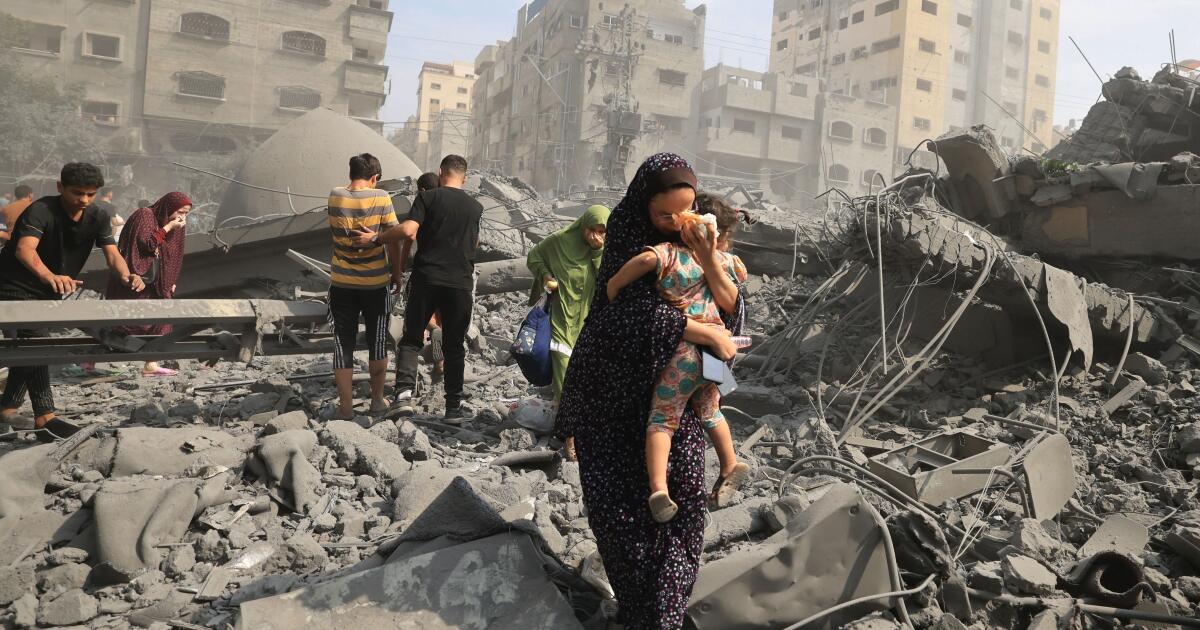
Hamas initiated an unprecedented attack on Israel on October 7th, involving hundreds of armed militants infiltrating communities near the Gaza Strip. The conflict resulted in over 1,400 Israeli casualties, while the Israeli military reported that 203 soldiers and civilians, including women and children, were taken as hostages in Gaza. In response, the Israeli military conducted air and artillery strikes in Gaza, leading to the loss of more than 4,000 Palestinian lives. Israel has also imposed a comprehensive blockade on the territory, restricting the flow of essential goods, including food and fuel. Additionally, Israeli troops have been amassing along the Gaza border, raising concerns about a potential large-scale ground operation. The conflict has displaced a significant number of Palestinians, resulting in humanitarian crises, including shortages of food, fuel, electricity, and medical supplies. Despite numerous diplomatic initiatives and peace processes, the lack of trust and compromises continues to hinder progress. Powerful Western countries, including the US, European Union members and the UK, still insist that two states are the only possible solution. The Israeli-Palestinian conflict involves not only the Israeli Defense Forces (IDF) and the Palestinian Authority (PA) but also various militant groups that have emerged in the region, including the People’s Liberation Army (PLA) and Hamas. The PLA’s primary objective is to achieve Palestinian self-determination and the establishment of an independent Palestinian state. Historically, it has employed both armed and political strategies to achieve these goals. While engaging in armed resistance against Israeli forces, the PLA has also participated in peace negotiations and diplomatic efforts, culminating in the Oslo Accords in the 1990s.
In 1948, unable to solve the problem, Britain withdrew and Jewish leaders declared the creation of the State of Israel. It was intended to be a safe haven for Jews fleeing persecution, as well as a national homeland for Jews. Fighting between Jewish and Arab militias had been intensifying for months, and the day after Israel declared statehood, five Arab countries attacked. In the 1967 conflict, Israel took control of East Jerusalem and the West Bank, alongside the majority of the Syrian Golan Heights, Gaza, and the Egyptian Sinai Peninsula.

The majority of Palestinian refugees and their descendants reside in Gaza and the West Bank, as well as in neighboring countries such as Jordan, Syria, and Lebanon. Israel has consistently denied them and their descendants the right to return to their original homes, contending that such a return would strain the nation’s resources and pose a threat to its identity as a Jewish state. Presently, Israel maintains its occupation of the West Bank and asserts its sovereignty over the entirety of Jerusalem, while Palestinians aspire to establish East Jerusalem as the capital of a future Palestinian state. The United States is one of the few countries that recognize Jerusalem as Israel’s capital. Over the past half-century, Israel has established settlements in the West Bank and East Jerusalem, where now more than 700,000 Jewish residents reside. These settlements are widely regarded as illegal under international law, a position affirmed by the UN Security Council and the UK government, among others, although Israel disputes this interpretation.
Hamas is a Palestinian militant and political organization founded in 1987. It emerged as an offshoot of the Muslim Brotherhood and gained popularity through its resistance to Israeli occupation. Hamas is distinct from the PLA and operates independently from the Palestinian Authority. Hamas’s ideological foundation is based on Islamist principles and its belief in liberating Palestine through armed struggle. The organization’s charter calls for establishing an Islamic state in historic Palestine, rejecting any recognition of Israel. Hamas is known for using suicide bombings, rocket attacks, and guerrilla warfare against Israeli targets. More Palestinians reject their own internationally recognized leadership and back armed resistance, while Israel remains in the grip of the most extreme government it has ever known, which has vowed to extend what it calls exclusive Jewish rights to all the land. Gaza Strip is a small, densely populated territory located on the eastern coast of the Mediterranean Sea, having a population of over two million Palestinians, making it one of the most densely populated areas in the world. The majority of the residents are refugees or their descendants who were displaced during the 1948 Arab-Israeli war.

Numerous contentious issues persist for which the two sides have been unable to reach consensus. These include:
- The fate of Palestinian refugees: The question of what should be done about Palestinian refugees, particularly in terms of their right of return to their ancestral homes or compensation for their displacement.
- Jewish settlements in the occupied West Bank: The dispute over whether Jewish settlements in the West Bank should remain in place or be dismantled.
- The shared status of Jerusalem: The contentious issue of whether both sides should have a stake in Jerusalem, as it holds religious and cultural significance for both Israelis and Palestinians.
- The creation of a Palestinian state alongside Israel: Arguably the most complex issue, it involves the establishment of a viable Palestinian state existing alongside the state of Israel, with clearly defined borders, sovereignty, and security arrangements.
Efforts to address the Israeli-Palestinian conflict must prioritize the protection of civilian lives and infrastructure, as well as the fulfilment of the rights and aspirations of both Israelis and Palestinians. International actors, including the United Nations and other stakeholders, should actively facilitate dialogue, de-escalation, and the pursuit of a just and lasting peace.
The escalation of violence is an alarming indication of the diminishing possibilities for political resolution. Concerns are mounting that Palestinian cities in the West Bank could experience heightened military offensives and increased security measures, resembling the circumstances faced by residents in Gaza. Gaza, governed by Hamas and subjected to an Israeli blockade, serves as a worrisome reference point. A comprehensive and sustainable solution to the Israeli-Palestinian conflict requires the recognition of the rights and self-determination of both Israelis and Palestinians.
 vision of sid
Thank you for that article, Sid, well researched as always. The western countries have – again – abandoned and left behind a mess that they created.
LikeLike
well researched article brother! Very informative!
LikeLiked by 1 person