


Read about Isreali-Palestinian issue (w/ Background) at: https://visionofsid.com/2023/10/22/bleeding-gaza-why-against-what/
Hamas initiated an unprecedented attack on Israel on October 7, involving hundreds of armed militants infiltrating communities near the Gaza Strip. The conflict resulted in over 1,139 Israelis and foreign nationals, including 764 civilians, being killed and 248 persons taken hostage during the initial attack on Israel from the Gaza Strip. Hamas later released 50 during a six-day ceasefire at the end of November, where Israel released 150 of the Palestinians from their prisons and opened the gates for the much-needed Humanitarian aid to pass. But thousands more Palestinians remain behind bars, often as detainees for years. As per the definition, a ‘detainee’ is someone “Legally, anyone who is being temporarily held or detained until they can be tried in a court”. However, over the years of the Isreal-Palestinian crises, thousands of Palestinians have been kept behind bars without being prosecuted in court, which makes the world question how exactly it unfolds.
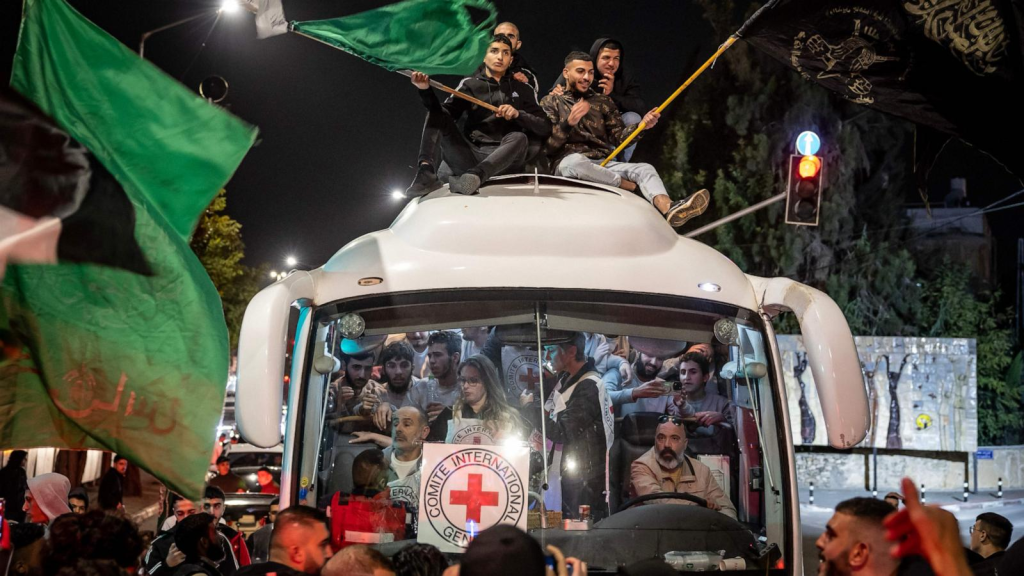
As of October 7, the number of Palestinians in Israeli administrative detention had reached a two-decade peak, with 1,310 individuals held without charge or trial, including at least 146 minors, as reported by the Israeli human rights organization B’Tselem. Subsequently, during the initial four weeks of the conflict, Israel significantly escalated its utilization of administrative detention, resulting in a surge in detainees to over 2,000 out of a total of approximately 7,000 Palestinian prisoners. Israel maintains its stance that it is entitled to bypass specific international obligations in the West Bank by asserting that the region is not part of its sovereign territory. Consequently, it argues that military laws, which may curtail civil rights, are applicable. Contrarily, watchdog groups, including the United Nations Human Rights Committee, assert that as the occupying power, Israel is obligated to uphold human rights in Palestinian territories. According to these groups, this becomes particularly crucial as the occupation persists and becomes more deeply rooted.
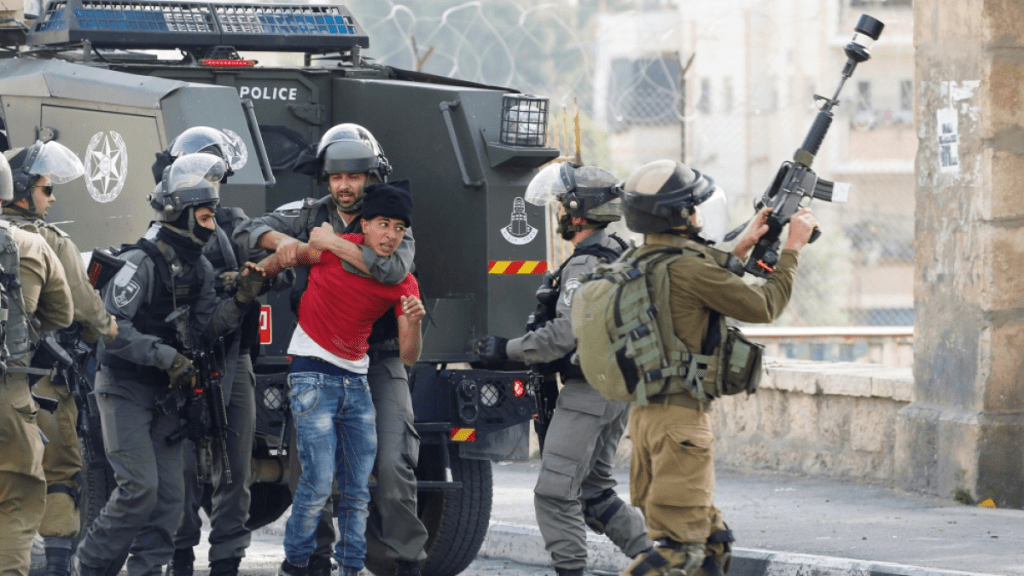
In 2022, Amnesty International released an extensive report highlighting administrative detention as just one example of the Israeli state’s methods to subjugate Palestinians and suppress dissent. Since 1967, Israel has issued over 1,000 military orders criminalizing various activities in the daily lives of Palestinians. These include displaying political symbols like flags, being present in specific areas without permits, and engaging in speech that loosely falls under the charge of “incitement.” Over the years, Israel has detained numerous individuals, including dozens of journalists, citing security concerns that often amounted to no more than social media posts. Why are there so many prisoners? In the aftermath of the 1967 war, approximately two months into Israel’s occupation of Palestinian and Arab territories, the government enacted Military Order 101. This order, which remains in effect in the occupied West Bank, criminalizes civic activities under the pretext of “hostile propaganda and prohibition of incitement.” Proscribed actions include participating in and organizing protests, producing and disseminating political materials, displaying flags and other political symbols, and engaging in activities expressing sympathy for organizations deemed illegal under military directives.
Subsequently, in 1970, the Israeli government issued another pivotal military order, number 378. This order not only established military courts but also categorized all forms of Palestinian resistance to the Israeli occupation as “terrorism.” Since then, numerous additional military charges have been introduced and enforced to restrict various aspects of Palestinian civic and political expression.

As of the latest count, there are 1,264 Palestinian administrative detainees, individuals held in custody without being subjected to trial or formal charges. Rooted in the British Mandate era, this practice permits indefinite detention based on “secret evidence,” enabling detainees to languish in prison for extended periods without facing specific charges.
The Israeli government contends that this procedure facilitates the holding of suspects while ongoing evidence gathering occurs. However, critics and human rights organizations argue that the system is prone to widespread abuse and infringes upon due process, raising concerns about its fairness and transparency. Not all Palestinian prisoners fall under administrative detention; before the recent conflict, around 5,000 Palestinians were in Israeli custody, with approximately 1,300 under administrative detention. A significant number faced imprisonment due to criminal charges and convictions.
While these convictions may appear legitimate, a closer examination reveals a legal system marked by unjust practices, virtually ensuring guilty verdicts. According to the Israeli government’s data, an overwhelming 99.7 per cent of cases in Israeli military courts ended in convictions in 2010. Palestinians are frequently denied legal representation, encountering language barriers and mistranslations that compromise testimonies and confessions admitted in court. Beyond due process issues, many cases involve dubious and expansive charges, contributing to concerns about the fairness and integrity of the legal system.

On the Hamas side, approximately 160 Israeli hostages are still in captivity, with an estimated 100 being Israeli civilians. The hostages released so far are mainly Israeli women and minors, as well as a Filipino, a Russian-Israeli man and 19 Thais, primarily men. Among them are soldiers who were captured during Hamas raids on military bases in Israel, and they might face prolonged captivity. Additionally, there are dual Israeli-American citizens, potentially including some members of the military, according to U.S. authorities. As the pool of hostages shrinks, Hamas could demand more prisoners, or higher-value ones, in exchange for hostages it holds either under the current deal or a future truce arrangement.
In the ongoing conflict, Israeli attacks have resulted in the death of at least 13,300 people in Gaza, as reported by the health ministry in Hamas-controlled Gaza. Hospitals are grappling with power shortages, and there is a shortage of essential supplies such as food, water, and fuel. According to the United Nations, three-quarters of Gaza’s population, totalling 2.2 million people, have been displaced within the region due to the conflict.
 vision of sid