


The picturesque northeastern Indian state of Manipur, known as the “Land of Jewels,” has been plagued by repeated inter-ethnic clashes between the Meitei and Kuki communities. The violence that erupted on May 3 has left behind a trail of destruction, claiming over 150 lives and burning more than 1,700 buildings, including homes and sacred sites. With more than 35,000 people displaced and seeking refuge in relief camps, the situation remains dire and potentially volatile. With Sexual violence being used as a tool to silence the less dominant group, where Chief Minister himself claims “hundreds of such cases” in the state, the people of Manipur deserve to be heard and not ignored.
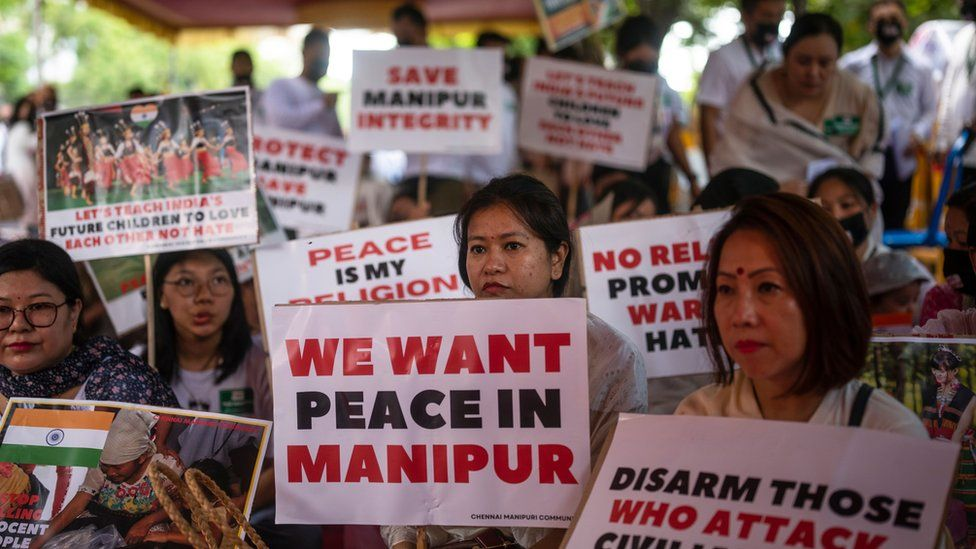
The violence in Manipur is not a new occurrence but rather a tragic consequence of historical grievances and identity politics that have long plagued India’s Northeastern region. The opposition to Manipur’s merger with India in 1949 laid the foundation for resistance and separatist movements, creating a deep trust deficit between the state and the central government. In response to this resistance, the controversial Armed Forces Special Powers Act was imposed in 1958, granting broad powers to the military in “disturbed areas,” including parts of the Northeast and Jammu and Kashmir. Rights groups have widely criticized this act, further exacerbating tensions.
The proliferation of armed groups in the region has only fueled the fire. Manipur houses numerous armed insurgent organizations, each vying for their claims to ethnic and communal homelands. Political power-seekers have taken advantage of this tumultuous situation, leading to rampant gun-running, human trafficking, and narcotics trade. As a result, Manipur has experienced a “war within a war,” with armed groups influencing state elections and intimidating politicians.
The recent violence in Manipur was triggered by a contentious decision by the Manipur High Court to consider granting Scheduled Tribe status to the Meitei community. While the Meiteis have long sought this recognition for constitutional protection and government benefits, the Kuki and Naga Indigenous communities expressed fears that such a move would deepen ethnic divisions and create unrest. After the court’s announcement, protests erupted, burning landmarks and villages, intensifying the already volatile situation. The ongoing violence in Manipur is closely linked to the civil war that erupted in neighbouring Myanmar shortly after its February 2021 coup. Reports indicate that Chin refugees from Myanmar have sought refuge in Manipur, though in smaller numbers compared to the adjacent state of Mizoram. One of the key reasons behind the Meitei community’s demand for Scheduled Tribe status is their claim that their position is being threatened by what they perceive as “illegal immigration from Myanmar and Bangladesh.” Radical Meitei groups like Arambai Tenggol and Meitei Leepun have accused the Kuki community, who share an ethnic heritage with the Chin, of unlawfully settling refugees in the hills of Manipur. According to official records, the state is home to approximately 10,000 Chin refugees.
As the crisis unfolds, reliable information from Manipur has been scarce, but images and reports from the state depict a war zone, with heavily armed militants roaming freely and citizens arming themselves out of desperation. The central government initially faced criticism for its silence, with opposition parties accusing the ruling BJP of fostering violence for political gains. Eventually, Home Minister, Amit Shah, visited Manipur to assess the situation and announced measures to restore normalcy, including a judicial probe and creating a peace committee. The central government deployed around 50,000 security personnel, predominantly from different regions, and established a unified command to oversee the various security forces operating in Manipur. However, these efforts yielded limited results. Manipur is characterized by segregated ethnic areas, with the dominant Hindu Meiteis residing mainly in the valley, where the state capital is located. At the same time, the predominantly Christian Kukis inhabit the surrounding hills. The state’s police force, which like the rest of the local administration, is made up largely of Meiteis, has also been segregated, with Kuki members either being transferred or fleeing to Kuki areas.

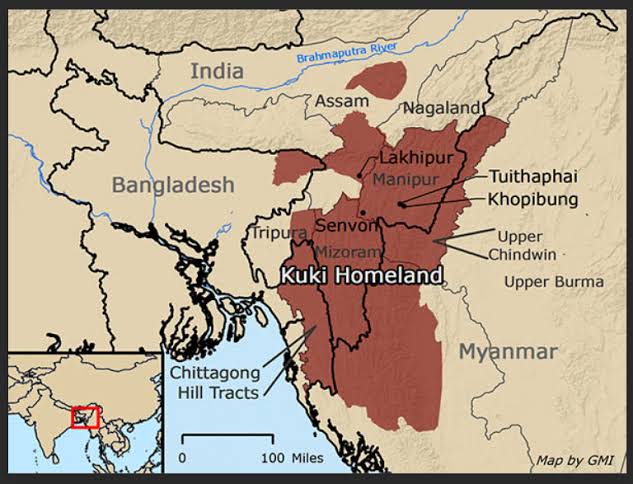
Another aspect to consider is of rising insurgencies in recent years. Manipur bears the burden of hosting over 30 ethnic rebel groups, primarily composed of men, all vying for their homelands. The Kuki militants, emerging in the early 1990s as a response to Naga attacks, signed a Suspension of Operations agreement in 2008, confining themselves to designated camps with their arms under lock and key. The recent clashes, while attributed by Manipur’s Chief Minister to Kuki militants attacking Meitei civilians, were dismissed by the Indian army’s top general as a clash between two ethnicities rather than a counter-insurgency operation. The violence risks rekindling separatist sentiments, with the Kuki demanding an autonomous administrative unit within Manipur to escape the tensions with Meitei. The spillover effects of the conflict have even reached Mizoram, where support for a separate homeland for the Kuki-Chin-Mizo ethnic group has resurfaced.
Adding to the complexity, Myanmar’s military regime has reportedly involved both Meitei and Kuki militant groups in supporting their security forces in return for safe haven, but alliances have shifted with the ongoing Manipur conflict. Chin fighters, ethnically related to the Kuki, are now supporting the Kuki in Manipur, while the Myanmar military regime backs the Meitei. This unrest has even impacted Myanmar, with unconfirmed reports of arms smuggling across the border for the benefit of both sides.

Manipur’s state government failed to put adequate security measures ahead of the tribal solidarity march on May 3. Thus it let the situation spin out of control throughout the state. Prompted by anger over the video depicting the abuse of two Kuki women, Prime Minister Narendra Modi spoke for the first time in public about the Manipur violence on July 20. Following the viral spread of the video, opposition party members quickly criticized the central government and the Prime Minister, questioning their capability to handle the situation. Government ministers have expressed concern over the incident, and in response, silent protests for justice on behalf of the victim have emerged nationwide. The opposition parties have strongly condemned the perceived incapability of the BJP and the Prime Minister in dealing with such matters.
The violence in Manipur reflects identity politics’ tragic consequences and colonial fault lines’ weaponization. The longstanding grievances of various ethnic communities have been exploited by power-hungry individuals and armed groups, leading to devastating consequences for innocent civilians.
 vision of sid