

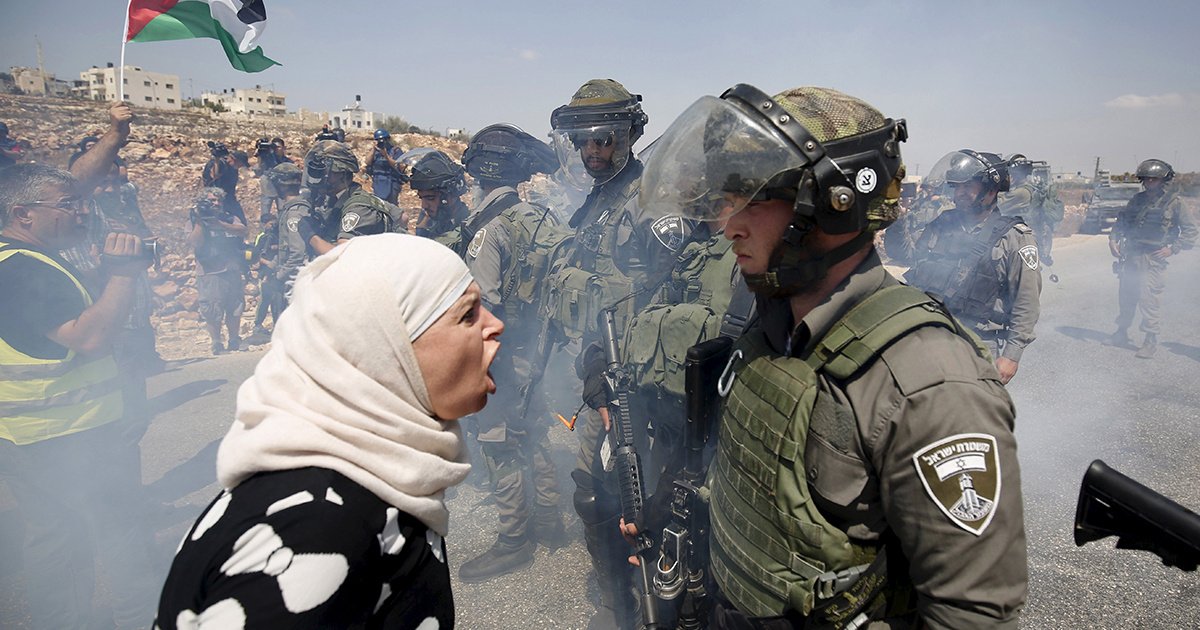
The conflict between Israel and Palestine has a long and complex history, marked by periods of relative calm and intense violence. On the 4th of July, Israel launched air attacks on the Gaza Strip in response to rocket fire from Gaza. Concurrently, Israel conducted a large-scale military operation in Jenin, a city in the occupied West Bank, resulting in significant casualties and destruction. The Israeli-Palestinian conflict dates back to the mid-20th century and is rooted in competing national aspirations and territorial claims. The establishment of the State of Israel in 1948 led to the displacement of hundreds of thousands of Palestinians, creating a protracted refugee crisis that continues today. The conflict has been characterized by sporadic outbreaks of violence, territorial disputes, and failed peace negotiations. In the 1990s, there were hopes that peace might come if an independent Palestinian state could be established alongside Israel, the so-called two-state solution. The attempt failed.

Powerful Western countries, including the US, European Union members and the UK, still insist that two states are the only possible solution. The Israeli-Palestinian conflict involves not only the Israeli Defense Forces (IDF) and the Palestinian Authority (PA) but also various militant groups that have emerged in the region, including the People’s Liberation Army (PLA) and Hamas. The PLA’s primary objective is to achieve Palestinian self-determination and the establishment of an independent Palestinian state. Historically, it has employed both armed and political strategies to achieve these goals. While engaging in armed resistance against Israeli forces, the PLA has also participated in peace negotiations and diplomatic efforts, culminating in the Oslo Accords in the 1990s.
Hamas is a Palestinian militant and political organization founded in 1987. It emerged as an offshoot of the Muslim Brotherhood and gained popularity through its resistance to Israeli occupation. Hamas is distinct from the PLA and operates independently from the Palestinian Authority. Hamas’s ideological foundation is based on Islamist principles and its belief in liberating Palestine through armed struggle. The organization’s charter calls for establishing an Islamic state in historic Palestine, rejecting any recognition of Israel. Hamas is known for using suicide bombings, rocket attacks, and guerrilla warfare against Israeli targets. More Palestinians reject their own internationally recognized leadership and back armed resistance, while Israel remains in the grip of the most extreme government it has ever known, which has vowed to extend what it calls exclusive Jewish rights to all the land. Gaza Strip is a small, densely populated territory located on the eastern coast of the Mediterranean Sea, having a population of over two million Palestinians, making it one of the most densely populated areas in the world. The majority of the residents are refugees or their descendants who were displaced during the 1948 Arab-Israeli war.

On the 4th of July, five rockets were fired from Gaza into southern Israel, prompting the activation of the Iron Dome defense system. In response, Israel launched air attacks on the Gaza Strip, targeting militant positions. Simultaneously, Israeli forces conducted a two-day military operation in Jenin, described as a “counter-terrorism operation” by the Israeli Defense Forces (IDF). The assault resulted in the deaths of at least 12 Palestinians in Jenin and one in Ramallah, with reports of widespread destruction and displacement. Many homes have no water or power. Aid volunteers bring crates of bottled water. They join the recovery workers, some driving the few diggers available. One is removing a downed tree from the top of a residential building. It shears away part of the facade of a shop on the ground floor, falling perilously close to us.
The Israeli armored convoys pulled out overnight amid intense gunfights with militants. Despite today’s calm, everyone fears more is coming. Israel says it will keep doing these kinds of operations “as long as necessary to uproot terrorism,” while Palestinian militant groups are claiming “victory” and vowing revenge.

Furthermore, the widespread destruction and displacement caused by the assault on Jenin highlight the humanitarian consequences of the conflict. Thousands of people, already refugees, were forced to flee their homes once again, exacerbating the humanitarian crisis in the region. Youssef al-Masri tells The Independent with a deep crack in his voice. “We didn’t see it coming, we just heard two big explosions.” Two of his children, Ibrahim and Marwan, were instantly killed, alongside eight of his relatives and neighbours. In Gaza there are no bomb shelters, and the death toll is considerably higher.
The recent air attacks on the Gaza Strip and the assault on Jenin have reignited international concern about the Israeli-Palestinian conflict. The historical context of the conflict, marked by competing national aspirations and territorial disputes, underscores the complexity of finding a peaceful resolution. However, the severity of the attacks and the allegations of war crimes emphasize the need for accountability and adherence to international humanitarian law.

Efforts to address the Israeli-Palestinian conflict must prioritize the protection of civilian lives and infrastructure, as well as the fulfilment of the rights and aspirations of both Israelis and Palestinians. International actors, including the United Nations and other stakeholders, should actively facilitate dialogue, de-escalation, and the pursuit of a just and lasting peace.
The escalation of violence is an alarming indication of the diminishing possibilities for political resolution. Concerns are mounting that Palestinian cities in the West Bank could experience heightened military offensives and increased security measures, resembling the circumstances faced by residents in Gaza. Gaza, governed by Hamas and subjected to an Israeli blockade, serves as a worrisome reference point. A comprehensive and sustainable solution to the Israeli-Palestinian conflict requires the recognition of the rights and self-determination of both Israelis and Palestinians.
 vision of sid